Top Single Phase Motor Manufacturers for Global Buyers

Time:2026-10-16 Author:Charlotte
0%

Choosing the right Single Phase Motor manufacturer can influence equipment performance, operating costs, and long-term maintenance. Global buyers often compare suppliers by efficiency, voltage compatibility, production capacity, certifications, and after-sales support. Yet a polished catalogue does not always reveal how a motor performs in a dusty workshop, a humid warehouse, or a small water-pumping system.

This guide examines leading manufacturers serving international markets. It considers practical factors, including copper winding quality, insulation systems, bearing durability, noise levels, thermal protection, and tested starting performance. These details matter when a motor runs continuously behind a compressor or starts repeatedly on a commercial appliance. Reliable manufacturers usually provide clear datasheets, traceable test reports, consistent model numbers, and responsive technical communication. Experience still matters.

Procurement decisions should also reflect regional power standards, installation conditions, shipping requirements, and local service availability. A motor designed for 230 volts may require different protection when used with unstable supply conditions. Buyers should verify efficiency claims instead of accepting every marketing statement. Some comparisons remain imperfect because factory data may use different testing methods. That limitation deserves attention.

The manufacturers discussed here are evaluated through an evidence-based lens, combining product specifications, industry reputation, customer experience, and support capabilities. The goal is not to name one universal winner. It is to help engineers, distributors, and project managers identify dependable suppliers for specific applications. Careful selection can reduce unexpected downtime, simplify replacement planning, and support safer, more efficient operation across global markets.
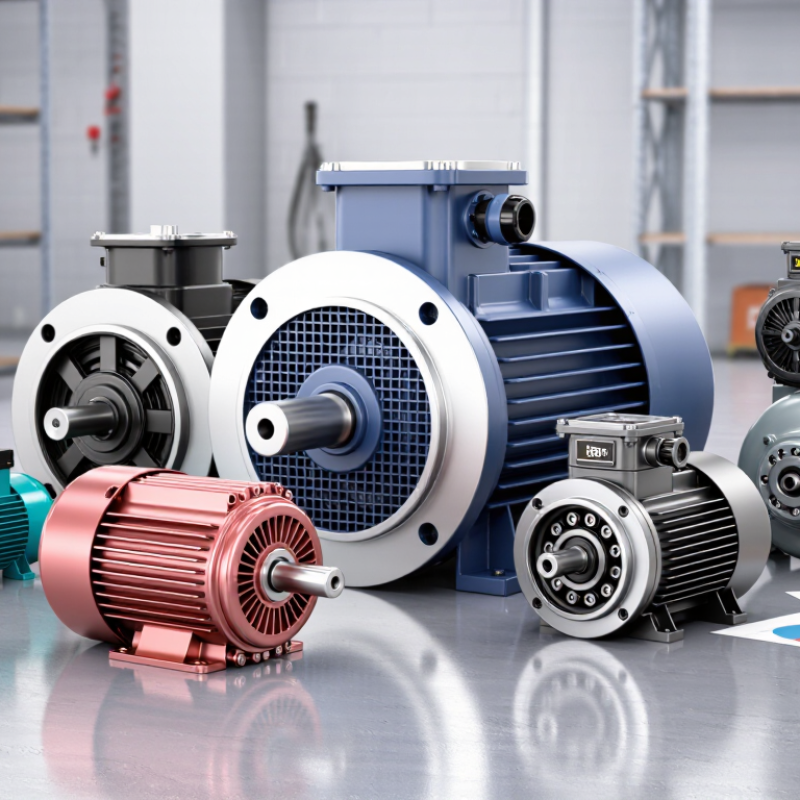
Top Single Phase Motor Manufacturers for Global Buyers

Single-Phase Motors: Types, Uses, and Core Operating Principles

Single-phase motors convert electrical energy into mechanical motion for equipment connected to ordinary power supplies. A single-phase supply creates a pulsating magnetic field, not a naturally rotating field. Therefore, the motor needs a starting method. Split-phase motors use an auxiliary winding and starting switch. Capacitor-start motors provide stronger starting torque for pumps, compressors, and workshop machinery. Capacitor-run motors operate more quietly and efficiently under continuous loads. Shaded-pole motors are compact, simple, and common in small fans.

Each design suits a different working condition. A refrigerator compressor may need high starting torque, while a ventilation fan usually needs steady, lighter torque. The motor’s rotating magnetic field develops when the main and auxiliary windings create a phase difference. A capacitor produces this shift in current timing. After startup, some motors disconnect the starting circuit, while others keep it active. The details matter.

Practical selection begins with voltage, frequency, rated power, speed, duty cycle, and load behavior. I also check the enclosure, ambient temperature, noise level, and starting current. A dusty workshop can punish an open-frame motor quickly. Oversizing is not always safer; it may reduce efficiency and raise purchase costs. Undersizing causes overheating and shortened insulation life. Real installations can be less tidy than catalog examples. Cable length, poor ventilation, and frequent starts often change performance. Testing current, vibration, and temperature during operation provides more dependable evidence than specifications alone.

Key Criteria for Evaluating Global Motor Manufacturers

Top Single Phase Motor Manufacturers for Global Buyers

Key Criteria for Evaluating Global Motor Manufacturers

For global buyers, evaluating a single phase motor manufacturer requires more than comparing catalog prices. Examine production experience, engineering depth, and evidence from similar applications. Ask how long the manufacturer has produced motors for your voltage, frequency, and duty cycle. Request test records for efficiency, temperature rise, vibration, noise, and insulation performance. A clear report is more useful than a sales promise. Check whether testing follows recognized international standards.

Audit quality controls from incoming copper wire to final assembly. Factory visits or live video inspections can reveal calibration practices, cleanliness, and product traceability. Ask for serial-number records and corrective-action procedures. The manufacturer should explain failure rates honestly, not hide behind general averages. No supplier is perfect. That matters.

Global supply requires more than production capacity. Review export experience, packaging strength, lead times, spare parts, and technical support across time zones. Confirm mounting dimensions, protection ratings, and operating conditions before approval. Request samples under real load conditions. Test them properly. A motor may run smoothly for ten minutes yet overheat after hours. Compare total ownership cost, including energy use, maintenance, freight, and rejected units. A low quotation can be attractive, but it may create higher costs later. Keep a written evaluation matrix, while leaving room for practical judgment.

Leading Single-Phase Motor Manufacturers by Regional Market

Top Single Phase Motor Manufacturers for Global Buyers

Leading single-phase motor manufacturers differ by regional demand, electrical standards, and service expectations. In North America, experienced producers often focus on 115V and 230V systems, durable housings, and motors for pumps, fans, and workshop equipment. Their testing usually covers starting performance, thermal protection, noise, and continuous operation. Local stock matters too. A reliable supplier can reduce replacement delays when a motor fails during peak production.

European manufacturers commonly emphasize compact designs, energy efficiency, and compliance with regional safety requirements. Buyers may find strong options for heating systems, ventilation units, agricultural equipment, and light industrial machinery. In East Asia, production depth supports broad customization, including different shaft sizes, capacitor configurations, and insulation classes. Quality can vary between factories, however. A polished catalogue does not prove consistent winding quality or final inspection.

South Asian manufacturers often compete through flexible production and practical pricing, while regional suppliers in Latin America may prioritize rugged motors for water systems and small processing facilities. Middle Eastern and African buyers should examine voltage stability, ambient heat, dust protection, and local technical support. Ask for test reports, efficiency data, warranty terms, and sample units before placing large orders. Regional labels are useful, but they can oversimplify real manufacturing capability. An on-site audit may still reveal weaknesses that documents miss.

Product Quality, Certifications, and International Compliance Standards

Top Single Phase Motor Manufacturers for Global Buyers

Product quality begins with measurable performance, not attractive catalog images. Reliable manufacturers test rated output, starting torque, temperature rise, vibration, and noise. Buyers should request test records for each motor series. A sample report may show insulation resistance, winding balance, and efficiency under defined voltage conditions.

Look for production systems aligned with ISO 9001 and motor testing based on IEC 60034 requirements. These references support consistent design, testing, and traceability. Check the nameplate carefully. It should state voltage, frequency, power, speed, duty cycle, insulation class, and IP rating. Small details matter. A missing duty rating can create costly installation errors.

International compliance depends on the destination market. A manufacturer may provide technical files, declarations of conformity, and applicable electrical safety evidence. CE marking can support European market access when the correct directives and assessments apply. Other regions may require local certification, energy rules, electromagnetic compatibility checks, or restricted-substance documentation. Ask for current documents, not scanned certificates with unclear dates. In supplier audits, I have seen impressive paperwork fail to match the actual motor model. That weakness deserves attention. Verify serial-number traceability, factory inspection records, spare-part support, and warranty terms before ordering. Independent testing is sometimes worthwhile for large shipments.

How Global Buyers Can Select the Right Motor Supplier

Selecting the right single phase motor supplier requires more than comparing catalog prices. The International Energy Agency reports that motor-driven systems consume roughly half of global electricity. Efficiency therefore affects operating costs, heat, and maintenance over many years. Ask suppliers for tested efficiency values, not broad marketing claims. Request the test standard, rated voltage, frequency, duty cycle, and ambient temperature.

A reliable supplier should explain starting torque, overload capacity, insulation class, bearing quality, and expected service life. These details matter when a motor starts a loaded conveyor in a dusty workshop. The U.S. Department of Energy notes that motor systems represent a major share of industrial electricity use, making correct sizing especially important. An oversized motor may seem safer, but it can run inefficiently under light loads. That choice deserves review.

Tips: Compare at least three technical quotations. Check factory test records and traceable certificates. Confirm spare-part availability near the installation site. Ask for a sample motor or inspection report before a large order. Evaluate warranty terms carefully; a long warranty means little without clear response times. Price is useful, but incomplete. A supplier with strong documentation may reduce hidden costs, although documentation alone cannot prove field performance. Request references from similar applications, then verify them independently. No checklist is perfect. A small pilot order can reveal vibration, noise, packaging weaknesses, or delivery problems before they become expensive mistakes.

Top Single Phase Motor Manufacturers for Global Buyers - How Global Buyers Can Select the Right Motor Supplier
Supplier Evaluation Dimension Typical Motor Category Common Output Range Typical Supply Voltage and Frequency Starting Performance Efficiency and Energy Considerations Protection and Insulation Relevant Standards or Documentation Best Fit for Global Buyers
General-purpose induction motor capability Single-phase capacitor-start or capacitor-run induction motor Approximately 0.12–5.5 kW for many standard commercial applications Common ratings include 110–120 V, 220–240 V, and 230 V; 50 or 60 Hz Suitable for pumps, fans, compressors, machine tools, and light industrial equipment Efficiency varies by design, load, voltage, and operating point; request test data at the intended load Common protection levels include IP44, IP54, and IP55; Class F insulation is widely used IEC 60034 series or NEMA MG 1, depending on the target market Buyers needing a broad standard product range and straightforward replacement sourcing
High-starting-torque capability Capacitor-start induction motor with auxiliary starting winding Approximately 0.25–3.7 kW in common equipment applications Usually specified for the local single-phase supply, such as 220–240 V at 50 Hz or 115 V at 60 Hz Higher starting torque than many capacitor-run designs; suitable for loaded starts Starting current can be relatively high, so the supply circuit and protective devices must be checked Thermal overload protection may be integrated or installed externally; confirm reset behavior IEC 60034-1, applicable local electrical safety requirements, and buyer-specific test procedures Compressors, belt-driven machinery, woodworking equipment, and pumps that start under load
Quiet and continuous-duty operation Permanent-split capacitor motor Approximately 0.03–1.5 kW for many fan, blower, and light-duty applications Commonly available in 115 V or 230 V designs at 50 or 60 Hz Moderate starting torque; not normally selected for heavy-load starting Can provide good operating efficiency for fan and blower loads when correctly sized Frequently supplied with Class B or Class F insulation; IP ratings depend on enclosure design IEC 60034 requirements plus applicable regional product-safety standards Ventilation fans, air-handling units, evaporative coolers, and light-duty pumps
Variable-speed application capability Single-phase motor designed for electronic speed-control compatibility Commonly below 2.2 kW, depending on the motor and controller architecture Voltage and frequency must match the motor-controller combination; do not assume compatibility from nameplate voltage alone Performance depends on the controller, minimum speed, acceleration profile, and load torque Low-speed cooling, harmonic heating, and acoustic noise should be evaluated during testing Verify thermal protection, electromagnetic compatibility, and enclosure requirements IEC 60034-17 or IEC 60034-25 may be relevant where converter operation is specified Applications requiring speed regulation, energy savings, or process control
Outdoor and humid-environment capability Totally enclosed fan-cooled or enclosed single-phase motor Approximately 0.12–5.5 kW, subject to frame size and cooling design Specify the exact local voltage, frequency, phase, and permissible voltage tolerance Starting characteristics depend on the winding and capacitor design Efficiency should be compared using the same rated output, duty, and test method IP55 is commonly requested for protection against dust and water jets; higher protection may be required for harsher environments IEC 60529 for IP classification and IEC 60034 for rotating electrical machines Outdoor pumps, agricultural machinery, cooling systems, and equipment exposed to dust or moisture
Corrosion-resistant construction Motor with coated housing, stainless components, sealed bearings, or enhanced surface treatment Available across small and medium single-phase motor sizes Must be matched to the installation country and the equipment control system Starting torque should be verified after the final enclosure, bearing, and seal configuration is selected Protective coatings do not automatically improve electrical efficiency; evaluate these separately Check coating system, fastener material, shaft-seal arrangement, drainage, and ingress protection IEC 60034, IEC 60529, and any application-specific hygiene or corrosion requirements Coastal installations, water-treatment equipment, food-processing areas, and chemical environments
High-efficiency product capability Optimized single-phase induction motor with improved magnetic circuit and winding design Often available in small and medium ratings, subject to regional regulations and product type Confirm rated voltage, frequency, duty cycle, and operating temperature before comparing efficiency Higher efficiency does not always mean higher starting torque; both values must be specified Request efficiency, power factor, no-load current, and full-load test results Thermal rise, insulation system, and cooling method affect lifetime and efficiency stability IEC 60034-2-1 test methods; regional minimum energy-performance rules may also apply Buyers focused on lifetime operating cost, energy regulations, and reduced heat generation
Custom engineering and OEM support Modified mounting, shaft, cable, brake, encoder, capacitor, or winding configuration Determined by the application, tooling, and production quantity Can be engineered for different national supply systems, but electrical validation is required for each configuration Supplier should provide torque-speed curves and starting-current data for the customized design Custom designs should be tested at the actual duty cycle rather than judged only by catalog data Confirm drawings, tolerances, materials, thermal protection, ingress protection, and change-control procedures IEC 60034, NEMA MG 1, and the buyer’s technical specification or approval process OEM projects, repeat production, equipment integration, and non-standard mechanical interfaces
International supply and compliance readiness Standardized motor platform with export documentation Depends on the supplier’s catalog and production capacity Supplier should clearly identify rated voltage, frequency, tolerance, duty, and connection method Documentation should include locked-rotor current or starting-current information where relevant Compare test conditions, measurement methods, and tolerances before making an efficiency claim Request nameplate artwork, installation instructions, safety warnings, packing specifications, and traceability information Applicable IEC or NEMA standards, regional conformity requirements, and destination-country import rules Distributors and global buyers requiring consistent documentation across multiple markets
Quality assurance and after-sales support Supplier with documented inspection and service procedures Not a motor rating; evaluate at the product-family and production-line level Verify that routine tests cover the exact voltage and frequency versions being purchased Request routine-test records for winding resistance, dielectric strength, no-load current, vibration, and rotation direction where applicable Ask for repeatability data, warranty terms, failure-analysis support, and corrective-action procedures Review bearing quality, capacitor reliability, thermal protector performance, and final inspection controls Quality-management certification can support supplier evaluation but does not replace product testing Long-term sourcing programs, private-label projects, and buyers requiring stable batch-to-batch performance
Selection note: Motor ratings and performance values are typical market ranges rather than supplier-specific offers. Final selection should be based on the application load, duty cycle, ambient conditions, installation method, local electrical requirements, and verified test documentation.

FAQS

What should global buyers check beyond a motor’s catalog price?

Review production experience, engineering capability, test records, and similar application evidence. A cheap quotation may create higher energy, maintenance, or rejection costs later.

Which electrical details should buyers confirm before approval?

Confirm voltage, frequency, duty cycle, mounting dimensions, protection rating, and operating conditions. Small mismatches can cause poor starting or overheating.

What testing records should a manufacturer provide?

Request results for efficiency, temperature rise, vibration, noise, and insulation performance. Testing should follow recognized international standards. Clear records matter.

Why are sample motors important?

Test samples under real load conditions and for several operating hours. A motor may run smoothly for ten minutes yet overheat later.

How can buyers evaluate factory quality controls?

Inspect incoming copper wire, winding, assembly, calibration, cleanliness, and traceability. Factory visits or live video inspections can reveal practical weaknesses.

What quality information should suppliers disclose?

Ask for serial-number records, failure rates, and corrective-action procedures. No supplier is perfect. Honest limits are more useful than vague promises.

How do regional needs affect single-phase motor selection?

Electrical systems, climate, safety requirements, and service expectations vary by market. Heat, dust, unstable voltage, and local support may affect performance.

What should buyers compare in the total ownership cost?

Include energy use, maintenance, freight, spare parts, lead times, and rejected units. Keep a written evaluation matrix, but allow practical judgment.

Conclusion

Single Phase Motor systems remain essential for residential, commercial, agricultural, and light industrial applications because they offer practical, reliable power where three-phase electricity is unavailable. This overview explains the main motor types, including split-phase, capacitor-start, and shaded-pole designs, along with their operating principles, typical uses, efficiency considerations, starting performance, and maintenance requirements. Understanding these fundamentals helps buyers match motor characteristics with equipment demands, load conditions, duty cycles, and installation environments.

For global buyers, selecting a dependable manufacturer requires careful evaluation of engineering capability, production consistency, quality control, technical support, delivery capacity, and customization options. Regional supplier comparisons should also consider market experience and after-sales service. Product certifications, safety testing, energy-efficiency ratings, and compliance with applicable international standards are essential for ensuring reliable import, installation, and operation. By comparing specifications, documentation, warranty terms, total ownership costs, and communication responsiveness, purchasers can identify a suitable Single Phase Motor supplier that provides consistent quality, regulatory confidence, and long-term value.

Charlotte

Charlotte

Charlotte is a seasoned marketing professional with a deep understanding of the company's portfolio and a passion for elevating its presence in the market. With a keen eye for detail and a commitment to excellence, she ensures that our professional blog is regularly updated with insightful articles......