Top 10 Electric Drive Motor Manufacturers in China 2026

Time:2026-11-11 Author:Aria
0%

China’s electric-vehicle supply chain is changing quickly, and motor manufacturers face pressure to deliver efficiency, durability, and consistent production quality. An Electric Drive Motor is more than a power unit: its design affects vehicle range, acceleration, heat management, and cabin noise. For buyers, these differences become tangible on a steep road, during a long commute, or after repeated fast acceleration.

International Energy Agency Executive Director Fatih Birol observed, “The era of electric cars is not around the corner, it is already here.” His comment captures the market shift, though it does not explain which suppliers can meet demanding engineering requirements. That takes closer inspection. This guide to the Top 10 Electric Drive Motor Manufacturers in China 2026 considers technical capabilities, product coverage, manufacturing experience, and evidence of quality systems. It also weighs practical factors such as voltage platforms, cooling methods, integration options, and support for different vehicle applications. Company claims deserve scrutiny. A polished specification sheet cannot reveal every production or service challenge.

Not every buyer needs the same motor. Some prioritize compact packaging; others need dependable output under sustained loads. There is no universal winner. The ranking should be read as a starting point, not a substitute for technical validation, factory discussions, or application-specific testing. China’s market is broad, and public information can be incomplete. That limitation matters. The profiles ahead aim to help engineers, procurement teams, and business readers compare manufacturers with clearer questions—and a healthy measure of caution.
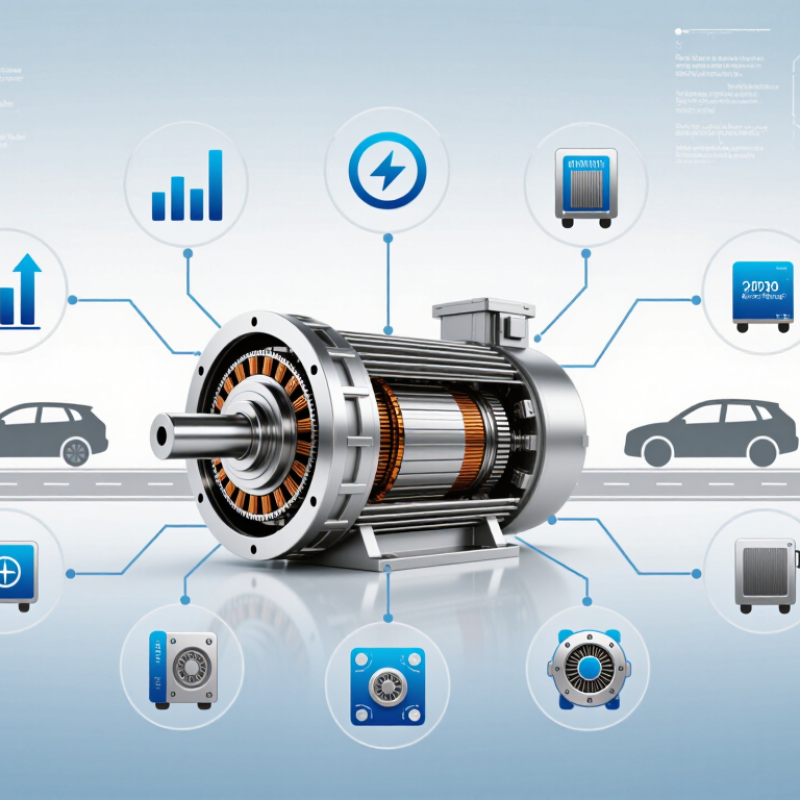
Top 10 Electric Drive Motor Manufacturers in China 2026

What Electric Drive Motors Are and How They Work

An electric drive motor turns electrical energy into mechanical torque at the wheels. In a typical electric vehicle, a battery supplies direct current, while an inverter shapes it into controlled alternating current for the motor. Inside, current in the stator creates a rotating magnetic field. That field pulls or pushes the rotor around, producing motion. Simple in principle. Precise in practice. Sensors and control software adjust current as speed, load, and pedal input change.

Many vehicles use permanent-magnet or induction motors, each with different trade-offs in cost, materials, efficiency, and operating range. A reduction gear transfers motor speed to the wheels; most designs do not need a multi-speed transmission. During regenerative braking, the motor works as a generator and returns some energy to the battery. The IEA’s Global EV Outlook 2024 reports nearly 14 million electric car sales in 2023, about 18% of global car sales. That scale makes motor design consequential, but the figure does not measure motor quality. Real performance also depends on cooling, inverter losses, vehicle weight, and driving conditions. A compact motor may look impressive on a specification sheet, yet sustained heat can reduce its output. That detail is easy to overlook.

How China’s Electric Drive Motor Manufacturers Are Evaluated

Evaluating China’s electric drive motor manufacturers in 2026 requires more than comparing peak power or efficiency figures. A credible assessment looks at motor design, inverter compatibility, thermal management, and performance across realistic operating conditions. Test data should explain the voltage, speed, load, and temperature used. Numbers need context.

Production quality matters just as much. Reviewers can examine process controls, traceability, inspection records, and consistency across batches. A strong prototype means little if production units vary. Practical evidence includes endurance testing, vibration checks, and clear procedures for handling defects. These details help distinguish repeatable engineering from polished marketing.

Supplier evaluation should also consider application experience and technical support. Can engineers help adapt a drive system to a vehicle’s weight, duty cycle, and cooling limits? Are service guidance and replacement parts available when equipment operates far from a factory? These questions reveal capabilities that a brochure may overlook. Rankings still have limits: public information differs between manufacturers, and impressive test results may not represent every use case. That uncertainty deserves attention, not a footnote. A fair comparison weighs verified performance, manufacturing discipline, and support together, while stating where evidence remains incomplete.

China’s Electric Drive Motor Industry in 2026

China’s electric drive motor industry enters 2026 with strong demand behind it. The International Energy Agency’s Global EV Outlook 2025 reports that electric car sales in China exceeded 11 million in 2024, representing almost half of new car sales. That scale creates steady pressure for motors that are compact, efficient, and suitable for high-volume production. The shop-floor details matter: winding consistency, heat control, and precise rotor balancing can affect performance and reliability.

Efficiency is becoming a practical purchasing issue, not just a technical target. In a vehicle, lower motor losses can help preserve driving range, while effective cooling supports repeated acceleration and heavy-duty operation. Manufacturers are also adapting designs for different vehicle platforms and operating conditions. China’s large domestic market encourages rapid testing, but fast product cycles can make quality control harder. That trade-off deserves attention.

The IEA’s figures describe vehicle sales, not motor shipments, so they should not be treated as a direct measure of motor-market size. Nor does rising demand guarantee equal results across suppliers. For 2026, buyers should examine verified efficiency data, durability testing, and production consistency alongside headline specifications. Numbers can look impressive. Real-world performance is less tidy.

Top 10 Electric Drive Motor Manufacturers in China 2026 - China’s Electric Drive Motor Industry in 2026

Representative supplier profiles, not a ranked list. Company names and brands are omitted. The entries describe common industry capabilities and applications; specifications vary by vehicle and product.

No. Supplier profile Common motor technologies Typical applications Drive-system scope 2026 industry considerations
1 Passenger-EV integrated drive suppliers Permanent-magnet synchronous motors (PMSMs); induction motors in some designs Battery-electric passenger cars Motor, inverter, and reduction gear packaged as an electric drive unit Efficiency, packaging, thermal management, and cost are key design factors.
2 Dedicated traction-motor producers PMSM and induction motor platforms Passenger cars and light commercial vehicles Motors supplied for integration with vehicle-specific inverters and gearsets Product variation includes power, torque, cooling, and voltage architecture.
3 Commercial-vehicle drive suppliers PMSM and other high-torque traction motor designs Electric buses, trucks, and delivery vehicles Traction motors and, depending on the product, integrated drive systems Continuous-load performance, durability, and serviceability matter for fleet use.
4 E-axle and electric-axle system suppliers Typically PMSM-based systems; configurations vary by vehicle Passenger vehicles and commercial vehicles Motor combined with transmission and axle components Integration can reduce system packaging needs, while requiring coordinated component design.
5 Hybrid-vehicle motor suppliers PMSM and other compact high-speed motor designs Hybrid and plug-in hybrid vehicles Traction, generator, or combined motor-generator functions Motor designs must work with the vehicle’s engine, battery, and transmission strategy.
6 Two- and three-wheeler drive suppliers Hub motors and centrally mounted traction motors Electric motorcycles, scooters, and three-wheelers Motor-only supply or motor-controller combinations Compactness, price, weather resistance, and ease of maintenance are common priorities.
7 Low-speed vehicle motor suppliers AC induction and permanent-magnet motor designs Utility vehicles, neighborhood vehicles, and selected industrial vehicles Motors and drive assemblies matched to low-speed platforms Application-specific safety, regulatory, and duty-cycle requirements affect product choice.
8 Industrial and off-highway traction suppliers Induction, PMSM, and other application-specific traction designs Forklifts, construction equipment, and specialized vehicles Traction motors, pumps, and auxiliary drive applications Dust, vibration, load profile, and operating environment influence system design.
9 Motor-and-inverter co-development suppliers Motor technologies selected for matched inverter control Passenger and commercial electric vehicles Joint motor, power electronics, and control-system development Co-design supports system optimization but depends on vehicle-level validation.
10 Specialized high-speed and auxiliary motor suppliers High-speed traction, oil-pump, coolant-pump, and other auxiliary motor designs Electric and hybrid vehicle subsystems Motors for specialized drive or vehicle-support functions Reliability, noise, thermal limits, and compatibility with the wider vehicle system are central concerns.

Note: This table is an industry-category overview, not a verified ranking of ten individual manufacturers. Motor type and system configuration depend on the specific vehicle program.

Profiles of the Top 10 Electric Drive Motor Manufacturers in China

China’s electric-drive motor sector includes manufacturers with very different strengths. These ten profiles are best read as capability snapshots, not a verified ranking. An integrated producer may design motors, inverters, and control software together, helping reduce packaging conflicts. A passenger-car specialist often focuses on quiet operation, compact layouts, and efficiency across everyday speeds. A commercial-vehicle supplier may prioritize sustained torque, thermal stability, and service access. A high-speed motor maker works around rotor balance and heat management. Small details matter.

Another profile is the permanent-magnet specialist, whose designs can deliver strong power density but require careful material and temperature planning. An induction-motor producer may appeal to buyers seeking a different balance of cost and operating range. Some manufacturers concentrate on low-speed motors for buses or industrial vehicles. Others emphasize modular platforms that can be adapted for several vehicle types. A research-led supplier may offer advanced testing, though production scale still needs checking. A regional manufacturer might provide responsive engineering support, but its export experience can vary. Buyers should compare test conditions, cooling methods, efficiency maps, and durability evidence. A polished specification sheet is not the whole story.

Key Technologies, Applications, and Market Trends

Electric drive motors in China’s 2026 market are judged by more than peak power. Buyers examine efficiency across the speed range, thermal stability, noise, and manufacturing consistency. Permanent-magnet synchronous motors support compact, high-torque designs. Induction and electrically excited motors offer different material and cost trade-offs. No design fits every vehicle or duty cycle.

Engineering advances are increasingly focused on the whole drive system. Hairpin windings can improve slot fill, while refined cooling channels help manage heat during repeated acceleration. Silicon-carbide inverters and higher-voltage platforms may reduce energy losses, but they also demand careful thermal and insulation design. Small details matter. A motor tested on a bench may behave differently in stop-and-go traffic or on a steep, loaded climb.

Applications now span passenger cars, delivery vans, buses, construction equipment, and industrial machinery. Each places different demands on torque, durability, packaging, and service access. Manufacturers are also integrating motors, inverters, and reduction gears into compact e-axles. Software calibration is becoming part of performance, not an afterthought. Yet comparisons can be misleading when test conditions differ. I would want clearer data on real-world efficiency, repairability, and performance after years of use. That evidence is still uneven.

FAQS

What does an electric drive motor do?

It converts electrical energy into mechanical torque that turns the wheels. Simple idea. Precise control.

How does a motor receive power in an electric vehicle?

The battery supplies direct current. An inverter shapes it into controlled alternating current for the motor.

What makes the motor’s rotor turn?

Current in the stator creates a rotating magnetic field. The field pulls or pushes the rotor around.

What is the difference between permanent-magnet and induction motors?

They balance cost, materials, efficiency, and operating range differently. Permanent-magnet designs can offer strong power density, but need careful heat and material planning.

Do electric vehicles need multi-speed transmissions?

Most use a reduction gear to transfer motor speed to the wheels. A multi-speed transmission is often unnecessary.

How does regenerative braking return energy?

During braking, the motor works as a generator and sends some energy back to the battery. Not all energy returns.

Why can heat reduce motor performance?

Sustained heat can lower a motor’s output. Cooling methods matter, especially during demanding driving or long periods of high load.

How should buyers compare motor manufacturers?

Compare test conditions, cooling methods, efficiency maps, and durability evidence. A polished specification sheet is not enough.

Do manufacturer profiles prove which supplier is best?

No. Profiles show different capabilities, not a verified ranking. I would not judge a supplier from one impressive figure.

Conclusion

This article explains what an Electric Drive Motor is and how it converts electrical energy into mechanical motion to power vehicles and industrial equipment. It outlines the criteria used to assess manufacturers, including engineering capability, production quality, efficiency, reliability, and the ability to meet different application needs. It also provides an overview of China’s electric drive motor industry in 2026, considering its development, manufacturing strengths, and evolving market demands.

The article profiles ten leading manufacturers without focusing on brand promotion, then examines the technologies and applications shaping the sector. Topics include motor design, power electronics, thermal management, and integration with vehicle drive systems, alongside uses in electric vehicles and other equipment. The final discussion highlights market trends such as improving energy efficiency, developing more compact and dependable systems, and responding to changing customer requirements. Together, these sections offer a practical overview of the industry and the factors influencing its future.

Aria

Aria

Aria is a dedicated marketing professional with a deep passion for innovative strategies and a keen understanding of our company's product offerings. With a wealth of experience in the industry, Aria excels at crafting engaging content that highlights the unique features and benefits of our......