How to Choose an Industrial Motor in 2026?

Time:2026-10-01 Author:Sienna
0%

Choosing an Industrial Motor in 2026 requires more than comparing horsepower and purchase prices. The correct decision begins with the machine’s real workload, operating environment, and expected service life. A conveyor in a dusty quarry faces different demands from a precision pump inside a climate-controlled plant. Small details matter. Starting frequency, load inertia, available voltage, and ambient temperature can change motor performance dramatically. Ignoring them may produce overheating, nuisance trips, or expensive production stoppages.

This guide draws on practical selection methods used by maintenance teams, engineers, and equipment manufacturers. It examines efficiency classes, variable-frequency-drive compatibility, torque requirements, enclosure ratings, and maintenance access. It also considers energy costs, spare-parts availability, noise, vibration, and integration with modern monitoring systems. A motor that looks economical on paper may cost more when downtime and rewinding are included. Likewise, the highest efficiency rating is not automatically the best fit. Oversizing can reduce efficiency.

Reliable selection depends on verified data, not confident guesses from a catalogue photograph. Check nameplate information, manufacturer documentation, test conditions, and applicable regional standards before approving a purchase. Independent testing and qualified engineering review can expose assumptions that a sales brochure may overlook. Still, no checklist predicts every factory floor. Dust patterns change. Operators improvise. A sound 2026 decision leaves room for commissioning measurements, follow-up inspections, and honest revision after the motor runs. That practical feedback often reveals whether the chosen Industrial Motor truly matches the process.
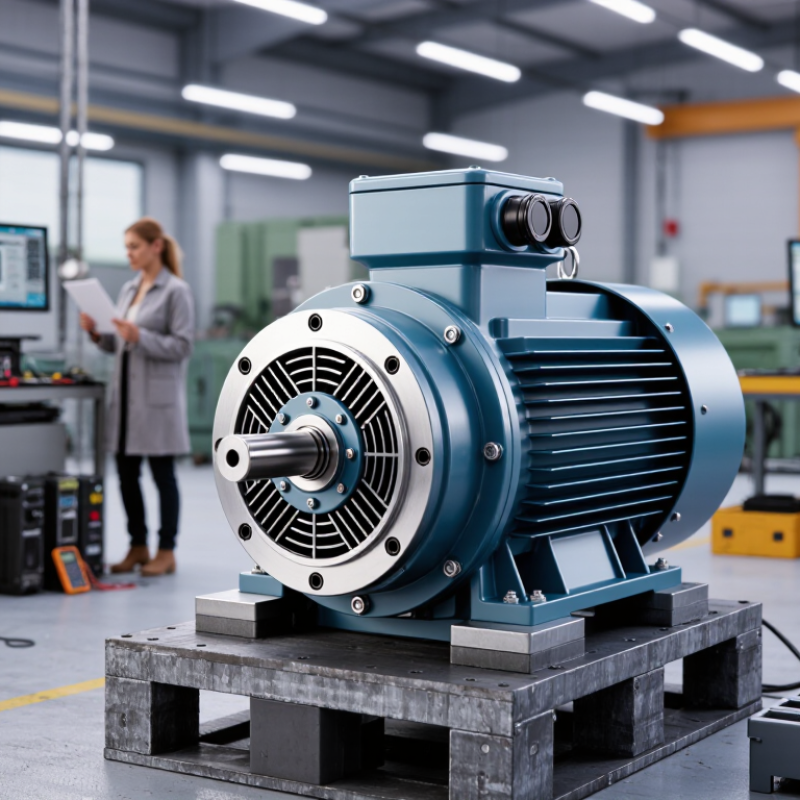
How to Choose an Industrial Motor in 2026?

Define Load, Speed, and Duty Using IEC 60034-1 Service Classes

How to Choose an Industrial Motor in 2026?

Motor selection should begin with load, speed, and duty, not catalog power alone. IEC 60034-1 defines service classes that describe how a motor actually operates. S1 means continuous duty, such as a pump running steadily for eight hours. S2 covers short-time duty, where the motor runs briefly and cools fully afterward. S3 describes repeated starts and stops, while S4 adds the thermal stress of frequent starting. These details can change the required motor size.

The numbers matter. The International Energy Agency estimates that electric motor systems consume about 46% of global electricity. U.S. Department of Energy assessments place motor-driven equipment near 70% of industrial electricity use. A small efficiency gain can therefore have a large operating effect.

For variable-speed conveyors, cranes, or compressors, check S4, S6, S7, S8, or S9 instead of assuming S1. Record acceleration time, peak torque, braking events, ambient temperature, and daily cycles. A motor rated for 30 kW may still overheat if its starts are too frequent.

Speed deserves equal attention. A fixed-speed motor may waste energy under changing demand, while an adjustable-speed system can reduce throttling losses. Yet this is not automatic. Harmonics, cooling at low speed, and rapid load changes need verification. I have seen selections fail because “intermittent” was treated as a vague description. The duty cycle must be measured, challenged, and documented. Duty labels simplify reality, sometimes too much.

Compare IE3, IE4, and IE5 Efficiency Classes Under IEC 60034-30-1

Choosing an industrial motor in 2026 starts with IEC 60034-30-1. This standard classifies motor efficiency under defined testing conditions. IE3 means Premium Efficiency, while IE4 indicates Super Premium Efficiency. IE5 represents the highest class currently defined in the standard.

The percentage difference depends on rated power, speed, and motor design. A 30 kW motor may show a smaller practical gap than expected. Check the declared efficiency at 50%, 75%, and 100% load. Real factories rarely operate at full load all day. Part-load performance matters. So does the drive.

IE3 often suits equipment with moderate running hours and limited budget pressure. IE4 can reduce annual losses in pumps, fans, compressors, and conveyors with long operating schedules. IE5 may deliver further savings, but it can require a compatible variable-speed drive and different maintenance skills. Compare purchase price, electricity cost, duty cycle, installation space, and expected service life. Read the test method and rated conditions carefully. IEC 60034-30-1 does not guarantee identical savings across an entire system.

Do not choose from the efficiency label alone. Measure actual load where possible. I have seen motors selected for impressive full-load figures, then operated mostly below 40% load. That decision looked efficient on paper, but the energy model was incomplete. Also verify voltage, frequency, starting torque, enclosure, cooling, and local requirements before ordering. Efficiency claims should match certified technical documents, not only a sales quotation.

Match Torque Demands to Induction, PM, or Synchronous Reluctance Motors

How to Choose an Industrial Motor in 2026?

Selecting an industrial motor starts with the real torque demand, not the nameplate power. Measure starting torque, continuous load, speed range, duty cycle, and braking requirements. Induction motors suit rugged conveyors, pumps, and machines with frequent overloads. They tolerate harsh conditions and remain widely serviceable, but their slip can reduce efficiency under changing loads.

Permanent magnet motors deliver high efficiency and strong torque from compact frames. They fit variable-speed equipment, robotics, and applications with long operating hours. However, magnet temperature, drive compatibility, and repair procedures require careful review.

Synchronous reluctance motors avoid rotor magnets and can reduce rotor losses. They work well with variable-frequency drives, especially where steady efficiency matters. Their torque performance depends heavily on correct control settings.

Tips: Record actual current and shaft speed during peak production. Compare the measured torque curve with certified motor data. Do not size only for average load. A short overload can stop a line. I have seen efficient motors underperform because the drive settings were rushed. That mistake is easy to repeat. Check ambient temperature, dust, washdown exposure, and available maintenance skills before deciding. If the load changes sharply, leave a verified torque margin and test the complete motor-drive system under realistic conditions.

Size the VFD System for Harmonics, Starting Current, and Grid Limits

How to Choose an Industrial Motor in 2026?

Size the VFD System for Harmonics, Starting Current, and Grid Limits

Motor selection now begins at the electrical boundary, not the nameplate. The U.S. Department of Energy reports that motor-driven equipment uses about 70% of industrial electricity in the United States. A VFD can reduce starting stress, but it can also inject harmonic current. IEEE 519-2022 evaluates distortion at the point of common coupling, where the utility sees the installation. Therefore, calculate short-circuit strength, load current, and the number of drives operating together.

Starting current still matters. Across many induction-motor applications, direct-on-line starting may reach five to eight times full-load current. A properly sized VFD ramps acceleration and limits this surge. However, undersizing the drive creates thermal trips, unstable acceleration, and shortened service life. Do not select only by motor kilowatts. Check overload duty, carrier frequency, ambient temperature, cable length, braking energy, and the actual load profile. A clean spreadsheet can still miss a weak transformer.

Tips: Request the utility’s voltage-distortion and demand limits before purchasing equipment. Use measured operating data when possible. Compare a standard six-pulse drive with line reactors, passive filters, or an active-front-end design. The right choice depends on grid stiffness and project cost. IEC 61800-3 provides an important EMC framework, but local requirements may be stricter. Review the harmonic study with a qualified engineer, and leave realistic capacity margin. Perfect sizing is rarely perfect in the field.

Rank Options by Lifecycle Cost as Motors Consume About 46% of Global Electricity

How to Choose an Industrial Motor in 2026?

Electric motors consume about 46% of global electricity, according to widely cited International Energy Agency estimates. That figure changes the buying question. The cheapest motor is rarely the cheapest asset. In a 2026 procurement review, rank options by electricity, maintenance, downtime, and disposal costs. Purchase price should come later.

The U.S. Department of Energy reports that motor-system energy can represent most of a motor’s lifetime expense. For a 75 kW motor running 6,000 hours annually, even a small efficiency gap can create substantial yearly losses. Use the plant’s real load profile, not only the nameplate rating. Check starting cycles, ambient temperature, harmonics, speed control, and expected service hours. A premium efficiency class may pay back quickly under continuous operation.

A spreadsheet can still lie.

Include installation, bearings, alignment, lubrication, spare availability, and unplanned shutdowns. Compare total cost over 10 to 15 years using local electricity prices and realistic operating hours.

The European Commission’s Ecodesign work also supports minimum efficiency requirements for industrial motors, but compliance alone does not guarantee the best result. An oversized motor may operate inefficiently at light load. A smaller unit may struggle during peak demand. Review measured data before deciding, and document every assumption. That last step is often neglected.

FAQS

How should I choose an industrial motor for a changing load?

Measure starting torque, continuous torque, speed range, duty cycle, and braking needs. Do not size from average load alone. A short overload can stop a production line.

When is an induction motor a practical choice?

Induction motors suit conveyors, pumps, and machines with frequent overloads. They tolerate dust, heat, and rough service. Their slip can reduce efficiency when loads change sharply.

When is a permanent magnet motor suitable?

Permanent magnet motors provide strong torque in compact frames. They suit variable-speed machines, robotics, and long operating hours. Review magnet temperature, drive compatibility, and repair procedures carefully.

What are the advantages of synchronous reluctance motors?

They avoid rotor magnets and can reduce rotor losses. They work effectively with variable-frequency drives. Correct control settings matter greatly.

What information should I collect before selecting a motor?

Record current, shaft speed, and torque during peak production. Compare the measured torque curve with certified motor data. Real measurements beat assumptions.

How should I size a variable-frequency drive?

Check motor current, overload duty, acceleration time, carrier frequency, and ambient temperature. Also review cable length, braking energy, and the real load profile. Do not select by kilowatts alone.

Can a variable-frequency drive create electrical problems?

Yes. It may reduce starting stress but increase harmonic current. Multiple drives can place extra pressure on a weak transformer. Review grid limits and distortion with a qualified engineer.

How can I compare motor costs over time?

Include electricity, installation, bearings, alignment, lubrication, maintenance, downtime, and disposal. Compare realistic costs across ten to fifteen years. Purchase price comes later.

Can an oversized motor waste energy?

Yes. An oversized motor may run inefficiently under light load. A smaller motor may struggle during peak demand. Use measured operating data before deciding.

What environmental details should affect motor selection?

Check ambient temperature, dust, washdown exposure, and available maintenance skills. Leave verified torque and capacity margin when loads change sharply. Perfect sizing is rare.

Conclusion

Choosing the right Industrial Motor in 2026 begins with clearly defining the application. Assess the required load, operating speed, starting conditions, and duty cycle according to the service classes of IEC 60034-1. Then compare IE3, IE4, and IE5 efficiency levels under IEC 60034-30-1, considering both energy savings and purchase costs. Motor technology should match the torque profile: induction motors offer versatility, permanent-magnet motors support high efficiency and compact designs, while synchronous reluctance motors can provide efficient operation with reduced rotor losses.

The drive system must also be evaluated as a complete package. Select the VFD based on motor rating, starting current, harmonic effects, cooling requirements, and applicable grid limitations. Finally, rank alternatives by lifecycle cost rather than initial price alone. Since motors account for a significant share of global electricity consumption, a properly sized and efficiently controlled system can reduce operating expenses, improve reliability, and support long-term energy goals.

Sienna

Sienna

Sienna is a skilled marketing professional with a deep expertise in our company’s core products and services. With a passion for innovation and detail, she plays a pivotal role in crafting insightful blog posts that not only highlight the unique features of our offerings but also provide valuable......