In 2026, choosing the right Gearbox supplier means looking beyond a low quote or polished product catalog. The decision affects uptime, energy use, maintenance workload, and the cost of replacing parts years later. A supplier should explain how its gearbox designs match your load, speed, duty cycle, environment, and installation limits. Ask for clear specifications, material details, test records, and guidance on lubrication and expected service intervals. Small details matter. A mounting mismatch or unclear tolerance can turn a promising purchase into delayed commissioning and avoidable expense.
This guide sets out practical criteria for comparing suppliers, from engineering capability and manufacturing consistency to delivery planning and after-sales support. It also considers how suppliers handle custom designs, spare-parts availability, quality documentation, and communication when requirements change. Look for evidence, not confident promises: request relevant case examples, inspection reports, and a named technical contact for complex applications. When possible, review sample components or arrange a factory or process audit suited to the project’s scale. No checklist fits every purchase. Some buyers may prioritize local service; others need specialized ratios, harsh-environment protection, or integration with existing equipment. The right choice is the supplier that can explain trade-offs plainly and support claims with verifiable information. Even then, one uncomfortable question remains: what could go wrong after installation, and who will help resolve it?
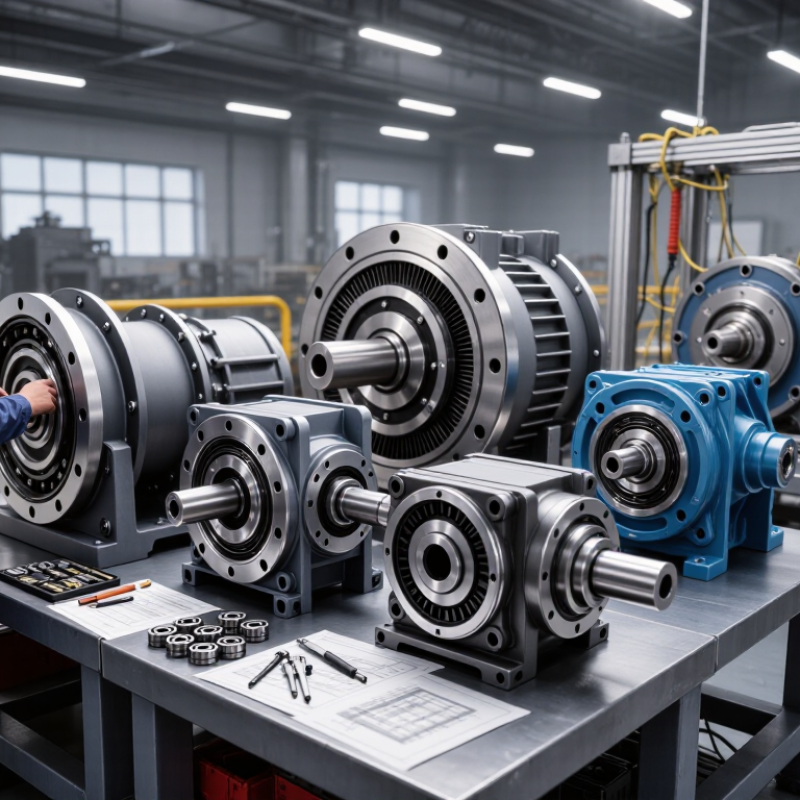
How to Choose the Right Gearbox Supplier in 2026?
Define Duty Cycle, Output Torque, Gear Ratio, and Mounting Requirements
Start with the machine’s real duty cycle, not its ideal operating schedule. Record operating hours, starts per hour, load changes, and rest periods. A conveyor running steadily differs from a mixer that starts under a full load. Note ambient temperature, dust, and any brief shock loads. Small details matter. Ask the supplier how these conditions affect thermal capacity and service life.
Specify required output torque at the gearbox shaft, including startup and peak loads. Do not size from motor power alone. Confirm the expected speed, then calculate the gear ratio needed to reach it. Account for gearbox efficiency, since output speed and torque can shift under real operating conditions. If your load data is incomplete, say so; estimates should not quietly become design limits.
Mounting details can rule out an otherwise suitable unit. Share a drawing showing shaft orientation, flange dimensions, available space, and connected loads. Include radial or axial forces when known, plus the environment where the gearbox will sit. Request written confirmation of torque, ratio, mounting, and operating assumptions. A neat specification can still miss a real-world constraint, so review it against the actual machine before ordering.
When comparing gearbox suppliers, ask how each rated its gears—not just for the stated kilowatt capacity. ISO 6336 evaluates load capacity for cylindrical gears, including tooth-root bending and flank contact strength. ANSI/AGMA 2001 provides rating methods for involute spur and helical gear teeth. The results are not automatically interchangeable. Different factors, material data, and assumptions can change the reported safety margin.
Ask for the calculation basis. That matters. Check the gear geometry, material hardness, quality grade, input speed, and duty cycle. A gearbox running steadily at 1,500 rpm faces a different load pattern from one that starts and stops under heavy torque. Request the service factor and the assumed lubrication conditions, too. A neat rating table can still hide a weak assumption. If the supplier cannot explain its inputs, the comparison is incomplete.
Compare like with like: confirm the same transmitted power, operating hours, load spectrum, and reliability target. Also ask whether the quote addresses bearings, shafts, and heat rejection; tooth ratings alone do not prove the whole gearbox will meet your operating needs. Even with aligned assumptions, some uncertainty remains. Real installations rarely match every calculation input exactly.
| Evaluation Dimension | What to Request Under ISO 6336 | What to Request Under ANSI/AGMA 2001 | Supplier Evaluation Check |
|---|---|---|---|
| Standard and calculation scope | Request the applicable ISO 6336 parts and editions. The series includes methods for load capacity of cylindrical gears, including surface durability and tooth bending strength. | Request the exact ANSI/AGMA 2001 designation and edition cited, plus the calculation scope used for the gear pair. | Confirm that the cited method applies to the gear type, geometry, material, and operating conditions. Do not assume results from different standards are directly interchangeable. |
| Tooth-root bending capacity | Ask for the calculated tooth-root bending stress, allowable stress, safety factor, and the assumptions used for geometry and load distribution. | Ask for the calculated bending stress, allowable bending strength, safety factor, and the relevant application and geometry factors. | Check that the report identifies the critical pinion or wheel and shows the inputs behind the reported safety factor. |
| Flank contact durability | Request the surface durability calculation, including contact stress, allowable contact stress, and the resulting safety factor. | Request the pitting-resistance calculation, including contact stress, allowable contact strength, and the resulting safety factor. | Verify that the assessment reflects the specified duty cycle, lubrication, material condition, and required service life. |
| Torque, speed, and duty cycle | Provide rated and peak torque, input speed, starts and stops, operating hours, and any reversing or shock loads. | Provide the same operating data and confirm how application severity and load duration are represented in the calculation. | Compare suppliers only when they use the same duty assumptions. A rating based solely on nominal torque may not represent the actual application. |
| Material and heat treatment | Request material specifications, hardness, heat-treatment condition, and the material-strength basis used in the rating. | Request the same information and confirm the strength values and factors used in the AGMA calculation. | Ask for material test documentation and heat-treatment records for production parts; distinguish through-hardened and case-hardened gears. |
| Gear geometry and accuracy | Request module or diametral pitch, tooth counts, pressure angle, helix angle, face width, profile modifications, and accuracy class. | Request the equivalent geometry and manufacturing-quality inputs used in the calculation. | Check that drawing data match the calculation model. Confirm the specified tolerances and inspection method for the finished gears. |
| Lubrication and temperature | Request lubricant type and viscosity, oil supply method, operating temperature, and the assumptions affecting lubrication and durability. | Request the corresponding lubrication, temperature, and operating-condition assumptions used in the rating. | Ensure the recommended lubricant and thermal limits are suitable for the gearbox installation and expected operating environment. |
| Load distribution and alignment | Ask how face-load distribution, shaft and bearing deflection, housing stiffness, and alignment are treated. | Ask which load-distribution and alignment factors are included and what supporting assumptions are used. | Look for a documented basis for the factors, especially for wide-face gears, flexible housings, or high-load applications. |
| Rating report and traceability | Request a calculation report listing the standard edition, inputs, factors, stresses, allowable values, and safety factors. | Request the same level of detail, with the exact AGMA method and factor definitions identified. | Prefer a report that can be traced to the supplied gear drawing and production configuration, rather than a single unsupported capacity figure. |
| Validation and quality controls | Ask for relevant inspection records, material certificates, and evidence that production gears match the rated design. | Ask for equivalent quality and validation records for the design and production process. | Confirm inspection coverage for tooth geometry, hardness, runout, and other application-critical characteristics. Request test evidence where required. |
| Comparing quoted ratings | Compare ISO-based results using identical geometry, loads, materials, duty, and calculation assumptions. | Compare AGMA-based results using those same defined inputs, while retaining the AGMA method and factors used. | Do not compare safety-factor numbers as if they were equivalent across standards. Ask for a common calculation basis or an independently reviewed comparison. |
| Selection tip: Choose a supplier that provides a transparent, application-specific rating report and can substantiate its design, materials, manufacturing controls, and inspection results. Confirm the current status and applicability of the cited standard edition with the supplier or standards organization before placing an order. | |||
How to Choose the Right Gearbox Supplier in 2026?
Verify Bearing Life: ISO 281 L10 Represents 90% Reliability
When comparing gearbox suppliers, ask how they verify bearing life—not just what figure appears in a catalog. Under ISO 281, basic rating life L10 is the life that 90% of a sufficiently large group of identical bearings are expected to reach or exceed under stated conditions. It is a statistical measure, not a guarantee that every bearing will last that long. That distinction matters. A supplier should show the bearing model, equivalent load, speed, and calculation assumptions behind the estimate.
Tips: Request the L10 calculation and check that it reflects your actual duty cycle. Ask about lubrication, operating temperature, contamination, and shock loads. A clean spreadsheet is useful, but the inputs matter more.
For example, a gearbox running continuously under steady load may have different bearing demands from one that starts and stops beside a dusty production line. Ask whether the supplier has accounted for those conditions and explain any assumptions you cannot verify. Also ask how reliability targets above 90% affect the calculation; ISO 281 provides methods for adjusted rating life. I would not treat a single L10 number as the whole answer. Real operating conditions can be messy, and estimates may need revision when field data arrives. A capable supplier should make that uncertainty visible rather than hide it behind a confident figure.
ISO 281 basic rating life L10 corresponds to 90% reliability: under the stated operating conditions, 90% of a sufficiently large group of identical bearings are expected to reach or exceed this life. For other reliability levels, the ISO 281 reliability factor a1 adjusts the rating life (Lnm = a1 × L10, with other life factors held constant). Ask suppliers to state their assumptions and operating conditions when comparing bearing-life claims.
Choosing a gearbox supplier in 2026 starts with checking the quality system behind the product. ISO’s ISO Survey 2022 recorded 1,265,216 ISO 9001 certificates across 189 countries and economies. That scale shows widespread adoption, not guaranteed gearbox performance. Numbers help. Ask for the certificate, its expiry date, and the certified site’s exact scope. Confirm it covers the plant and processes making your gearbox, not only a sales office.
Then test how the system works on the shop floor. Request a traceability example linking a gear’s material batch to heat-treatment records, inspection results, and final shipment. Check calibration records for torque tools and dimensional equipment. Ask how the supplier investigates a failed tooth-contact pattern or an out-of-tolerance shaft, and whether corrective actions were verified later. ISO 9001:2015 requires controlled processes and attention to nonconformities, but an audit cannot reveal every weak shift or rushed order. That matters. Compare documented procedures with recent, anonymized production records, and speak with the quality manager who handles actual deviations. A certificate is a useful filter, not a substitute for evidence.
Compare Efficiency, Lead Time, Spare Parts, and Lifecycle Cost
A gearbox quote should show more than purchase price. Ask for efficiency data at your actual speed, load, and duty cycle. A unit tested near your operating point gives more useful evidence than a broad rating. Check heat loss, too; excess heat can signal wasted energy and added cooling needs. Small differences matter. Confirm lead time includes design approval, production, inspection, and delivery. A short estimate is less useful if key milestones remain unclear.
Tips: Request a written delivery schedule and a recommended spare-parts list. Check whether seals, bearings, and other wear parts are stocked or made to order. Ask how replacement parts are identified, so maintenance staff can match them correctly.
Compare lifecycle cost over the expected service period. Include energy use, lubricant changes, inspections, likely downtime, and replacement parts. A cheaper gearbox may cost more if it runs inefficiently or takes weeks to repair. Review warranty terms and technical support response times in writing. For a fair comparison, use the same load assumptions and operating hours for each quotation. Still, estimates are not perfect: real duty cycles often change after installation. Recheck your assumptions after the first operating season, and adjust the maintenance plan using actual operating records.
Record operating hours, starts per hour, load changes, and rest periods. Note ambient heat, dust, and brief shock loads. Small details matter.
State the torque needed at the gearbox shaft, including startup and peak loads. Do not size the unit from motor power alone.
Confirm the required output speed, then calculate the ratio needed to reach it. Include gearbox efficiency, since real operating conditions can affect speed and torque.
Share a drawing with shaft orientation, flange dimensions, and available space. Include connected loads and known radial or axial forces.
Under ISO 281, L10 is the life that 90% of a large group of identical bearings are expected to reach or exceed under stated conditions. It is statistical. Not a guarantee.
Ask for the bearing model, equivalent load, speed, and calculation assumptions. Check whether lubrication, temperature, contamination, and shock loads are included.
Review the ISO 9001:2015 certificate, expiry date, and certified site scope. Confirm that it covers the plant and processes making your gearbox.
Request a traceability example linking a material batch to heat-treatment records, inspections, and shipment. Check calibration and corrective-action records too. Inputs matter.
Choosing the right Gearbox supplier in 2026 starts with a clear understanding of the application. Define the duty cycle, required output torque, gear ratio, and mounting arrangement before comparing suppliers. These details help ensure the proposed unit can handle expected loads and fit the equipment. Review gear ratings using recognized methods such as ISO 6336 or ANSI/AGMA 2001, and confirm that the supplier’s calculations match the operating conditions rather than relying on headline capacity alone.
Bearing life and manufacturing quality also matter. ISO 281 L10 life estimates the point at which 10% of a group of bearings may have reached fatigue failure, corresponding to 90% reliability under the stated assumptions. Check that the supplier maintains a documented quality system aligned with ISO 9001:2015. Finally, compare efficiency, delivery lead time, spare-parts availability, and lifecycle cost. A well-rounded assessment can help you select a dependable Gearbox solution that suits both performance needs and long-term operating priorities.

YWOO Motor