China has become a major sourcing destination for Rotary Actuator systems used in packaging, robotics, material handling, and automated assembly. Global buyers now expect more than competitive pricing. They need repeatable torque, accurate positioning, stable seals, and dependable technical support.
A Rotary Actuator may look compact. Its working conditions are not. A dusty packaging line, a washdown area, or a high-cycle robotic joint can expose weak design choices quickly. Buyers should examine torque curves, backlash, cycle ratings, bearing construction, shaft protection, and response under real loads. Factory audits, sample testing, and traceable quality records also matter. Certificates alone do not prove long-term performance.
As control engineer Peter Nachtwey has often emphasized, “An actuator is only as good as the feedback and mechanics supporting it.” This practical reminder deserves attention. A supplier may offer an impressive catalog, yet poor integration can still cause vibration, heat, or unexpected downtime. Sometimes, the overlooked cable routing causes trouble.
This guide introduces leading China-based Rotary Actuator manufacturers for global buyers. It considers engineering depth, production consistency, customization capability, export experience, and after-sales responsiveness. Evidence should guide the comparison. Product pages can be useful, but independent test results are stronger. Factory visits reveal more than polished brochures.
No supplier is perfect. That includes established manufacturers. Buyers should match actuator design with load, environment, duty cycle, and control architecture before placing large orders. A careful shortlist can reduce technical risk while preserving the cost advantages of China’s industrial supply chain.
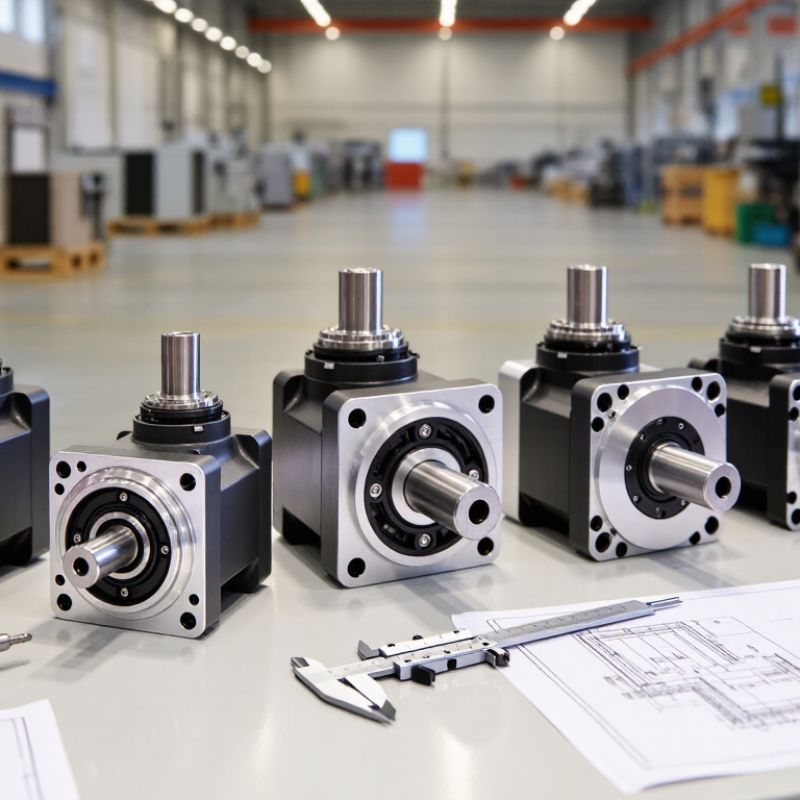
A rotary actuator converts energy into controlled rotary motion. Unlike a linear actuator, it turns a shaft through a limited angle or continuous rotation. Common energy sources include compressed air, hydraulic pressure, and electric power.
Inside a pneumatic model, air pressure moves a vane or rack-and-pinion mechanism. Hydraulic versions use pressurized fluid to create higher torque for heavy equipment. Electric models rely on a motor, gearbox, and control system. The gearbox reduces speed and increases turning force. Sensors may report position, speed, or torque to a controller.
In practical installations, mounting accuracy matters. A small misalignment can create vibration, seal wear, or uneven loading. I have seen an actuator perform well on a test bench but struggle after installation. The problem was not the rated torque. It was insufficient support around the driven shaft. That assumption is often wrong.
Engineers should check torque, rotation angle, duty cycle, response time, and environmental conditions. Dust, moisture, temperature, and repeated impacts can change performance. A safety factor is useful, but excessive sizing increases cost and energy use. Chinese manufacturers serving global buyers often provide pneumatic, hydraulic, and electric options with custom shaft designs. Buyers should request technical drawings, test data, material details, and traceable quality records before approval. Datasheets help. Real application testing matters more.
China Top Rotary Actuator Manufacturers for Global Buyers
Key Types of Rotary Actuators Made in China
Chinese manufacturers produce several rotary actuator types for packaging, robotics, valves, and material handling. Pneumatic rack-and-pinion actuators offer quick 90-degree movement and simple maintenance. Vane actuators save space but usually provide lower torque. Electric rotary actuators support accurate positioning, speed control, and cleaner factory operation. Servo rotary tables add feedback for indexing and robotic assembly. Hydraulic models remain useful when heavy loads demand high torque in compact spaces.
Demand is expanding with factory automation. The International Federation of Robotics reported 541,302 industrial robots installed worldwide in 2023. China accounted for 276,288 installations, or about 51% of the global total. This manufacturing base supports wider actuator choices, faster customization, and competitive production volumes. However, specifications can look better than real performance. Buyers should verify torque curves, backlash, cycle-life testing, sealing ratings, and electrical documentation. A low quotation may hide weaker bearings or inconsistent machining.
Tips: Match actuator torque to the real load, not the catalog maximum. Check load inertia and duty cycle. Request test records from the actual production batch. For outdoor valves, confirm the IP rating and corrosion treatment. Sample testing is wise. It is not always convenient, but it can expose noise, heating, or uneven rotation before shipment. Third-party inspection also helps, although inspection alone cannot replace a complete engineering review.
| Actuator Type | Operating Principle | Typical Torque / Load Range | Typical Rotation | Common Control Method | Typical Applications | Key Buyer Considerations |
|---|---|---|---|---|---|---|
| Pneumatic Rack-and-Pinion | Compressed air drives pistons connected to a rack and pinion mechanism. | Approximately 5–8,000 N·m, depending on bore size and air pressure. | 90°, 120°, 180° or other preset angles. | Solenoid valve, pneumatic positioner or manual override. | Quarter-turn valves, dampers, process automation and material handling. | Air pressure, breakaway torque, corrosion protection, mounting interface and fail-safe configuration. |
| Pneumatic Vane | Compressed air acts on a vane inside a rotary chamber. | Generally suited to low-to-medium torque duties, often below 500 N·m. | Typically adjustable from 90° to 270°. | Directional control valve, flow controls or proportional valve. | Compact indexing, clamping, light assembly equipment and small dampers. | Compact dimensions, angular adjustment, air consumption, stopping accuracy and duty cycle. |
| Electric Quarter-Turn | An electric motor and gear train produce controlled rotary motion. | Approximately 10–4,000 N·m for common industrial valve sizes. | Usually 90°, with adjustable intermediate positions. | On/off, modulating, 4–20 mA, 0–10 V, fieldbus or digital input. | Ball valves, butterfly valves, HVAC dampers, water treatment and process lines. | Voltage, duty rating, output torque, ingress protection, feedback, manual override and emergency operation. |
| Electric Multi-Turn | A motor and reduction gearbox provide multiple output-shaft rotations. | Common output torque range is approximately 50–10,000 N·m. | Several turns to many turns, according to valve travel. | Local control, remote I/O, 4–20 mA, Modbus or other industrial networks. | Gate valves, globe valves, sluice gates and linear valve mechanisms. | Stem thrust, travel length, speed, limit switches, torque protection and enclosure rating. |
| Hydraulic Rotary | Pressurized hydraulic fluid generates high rotary force through a vane, piston or helical mechanism. | From several hundred to over 100,000 N·m in heavy-duty designs. | Usually 90°–360°, with custom angles available. | Directional valve, proportional valve, hydraulic pump and electronic controller. | Construction equipment, steel machinery, marine systems, forestry equipment and heavy valves. | Working pressure, oil cleanliness, leakage control, torque at speed, shock loads and hose connections. |
| Servo Rotary Actuator | A motor, drive and feedback device provide closed-loop position or speed control. | From less than 1 N·m to several hundred N·m, depending on the servo platform. | Continuous or limited-angle rotation with programmable positioning. | Servo drive, encoder feedback, EtherCAT, CANopen, pulse train or analog command. | Robotics, packaging, CNC equipment, assembly lines and precision indexing. | Resolution, repeatability, inertia matching, peak torque, acceleration, braking and communication protocol. |
| Stepper Rotary Actuator | A stepper motor converts electrical pulses into discrete angular movement. | Common holding torque is approximately 0.05–20 N·m. | Continuous rotation or indexed movement; typical basic step angle is 1.8°. | Pulse-and-direction driver, microstepping driver or motion controller. | Labeling, laboratory equipment, small automation systems, feeders and indexing tables. | Load inertia, resonance, missed-step risk, speed-torque curve, microstepping and thermal performance. |
| Rotary Solenoid | Electromagnetic force produces a limited rotary stroke, often through a spring-return mechanism. | Generally used for low torque, commonly below 1 N·m. | Usually a fixed short stroke, commonly 20°–90°. | Direct voltage switching, relay output or transistor control. | Latches, locks, air vents, small mechanisms and vending or dispensing equipment. | Voltage, pulse duration, return spring force, operating temperature, noise and allowable duty cycle. |
| Rotary Gear Motor | A DC or AC motor uses a gearbox to increase torque and reduce output speed. | From low torque below 1 N·m to several hundred N·m in industrial gearmotor systems. | Continuous rotation; speed commonly ranges from below 1 to several hundred r/min. | Direct switching, PWM, motor controller, inverter or variable-frequency drive. | Conveyors, mixers, gates, turntables, feeders and general machine automation. | Output speed, gear ratio, starting torque, service factor, backlash, lubrication and mounting orientation. |
Note: Performance figures are representative selection ranges for industrial rotary actuator categories. Actual values vary by design, operating conditions, duty cycle and configuration.
Evaluating China’s top rotary actuator manufacturers requires more than comparing prices. Check their engineering experience with your actuator type, including vane, rack-and-pinion, or electric designs. Ask for torque curves, backlash data, cycle-life results, and operating temperature limits. A serious manufacturer should explain test methods clearly. Vague answers are warning signs. Request material certificates, inspection records, and traceability for critical components. Certifications help, but a certificate alone proves little.
Order samples before approving volume production. Measure torque, rotation angle, response time, leakage, and noise under realistic loads. Review the production line, calibration equipment, and final inspection process through a video audit or site visit. Also examine packaging, spare-part support, warranty terms, and communication speed. A dependable supplier should provide drawings and technical changes in writing. Lead time claims may look attractive, yet capacity can change during peak seasons. No checklist is flawless. Even careful buyers can overlook small tolerance issues.
Tips: Compare at least three suppliers using identical specifications. Ask for a sample test report, not only promotional figures. Confirm whether quoted performance includes pressure, temperature, and load conditions. Keep one approved sample for future comparison. Discuss failure handling before signing a purchase agreement. The best partner is not always the cheapest. It is the manufacturer that documents limits, admits weaknesses, and improves after testing.
The chart presents a practical buyer-focused evaluation model for rotary actuator manufacturers. Product performance and quality systems receive the highest weights, followed by customization capability, delivery reliability, technical support, and total cost. Buyers should verify these areas through datasheets, ISO 9001 documentation, sample testing, factory audits, and commercial references.
Industry Standards, Quality Control, and Customization Options
Reliable rotary actuator sourcing begins with measurable standards, not attractive catalog photographs. Experienced manufacturers should provide material certificates, dimensional drawings, and a clear quality plan. ISO 9001-based procedures can support consistency, but certification alone proves little. Buyers should verify torque ratings, rotation limits, sealing performance, and expected service life.
Quality control should follow the actuator through every stage. Inspectors may check shaft runout with calibrated gauges and test seals under specified pressure. Functional tests should confirm smooth movement, repeatable positioning, and emergency stop behavior. Batch records also matter. They connect each unit to components, operators, and inspection results. Ask for sample reports before placing a large order.
Customization often includes mounting patterns, shaft geometry, control interfaces, coatings, and operating temperature ranges. A capable engineering team reviews the application before changing dimensions. That review should consider load direction, duty cycle, contamination, and installation space. Small changes can affect torque and wear. We have seen projects fail because a mounting detail was assumed, not documented. No supplier gets every detail right. Open drawings, prototype testing, and written approvals reduce that risk. Buyers should also question lead times, spare parts, and after-sales response. These details often reveal manufacturing maturity better than a polished sales presentation.
China Top Rotary Actuator Manufacturers for Global Buyers
Export service often separates a dependable rotary actuator supplier from a low-cost listing. Experienced manufacturers should provide drawings, torque curves, samples, inspection records, and clear shipping terms. Buyers should check whether stated torque reflects continuous or peak performance. That detail can change the final selection. The World Bank’s Logistics Performance Index 2023 gave China an overall score of 3.7, showing strong logistics capability, but port delays and customs differences still require planning.
Pricing depends on torque, rotation angle, housing material, sealing grade, motor type, quantity, and testing requirements. Freight, insurance, export packaging, and Incoterms also affect the landed cost. A basic actuator may appear affordable. It may not include position feedback or corrosion protection. Global buyers should request a complete quotation with tooling, spare parts, lead time, warranty, and payment conditions. The International Trade Centre’s Trade Map can help compare tariff classifications and import trends before signing a contract. Market reports are useful, but they cannot replace a technical review.
Tips: Request two samples before mass production. Confirm the HS code with your customs adviser. Ask for a video test under load. Keep one tolerance question open; drawings are sometimes less precise than buyers expect. Check packaging with real transit conditions, not only factory photos.
Request torque curves, backlash data, cycle-life results, rotation limits, and operating temperature ranges. Vague answers deserve caution.
Samples reveal real torque, response time, leakage, noise, and rotation accuracy under realistic loads. Promotional figures may not show everything.
Review calibration equipment, inspection records, material certificates, and component traceability. A video audit can expose process gaps.
It should cover actuator price, tooling, spare parts, testing, packaging, freight, insurance, warranty, and payment terms. Hidden costs matter.
Torque, sealing grade, housing material, motor type, corrosion protection, and position feedback can raise the price. Cheap may mean incomplete.
Give at least three suppliers identical specifications. Compare sample results, limits, lead times, documentation, and support.
Confirm shipping terms, customs classification, packaging strength, insurance, and expected port delays. Transit is not always smooth.
Small tolerance differences can escape inspection. Drawings may seem precise, yet some details remain unclear.
A dependable supplier documents limits, admits weaknesses, and responds clearly after testing. The cheapest option is not always suitable.
Keep one approved actuator, its test report, drawings, tolerances, and written technical changes. This creates a useful future reference.
A Rotary Actuator converts fluid, pneumatic, or electrical energy into controlled rotary motion, making it essential for valve operation, robotic systems, material handling, packaging equipment, and industrial automation. Chinese manufacturers commonly produce pneumatic, hydraulic, electric, and rack-and-pinion rotary actuators, with options for different torque ranges, rotation angles, installation methods, and operating environments. Buyers should evaluate manufacturers by reviewing engineering capabilities, production capacity, product consistency, testing procedures, and experience with international projects.
Quality evaluation should also cover compliance with relevant industry standards, material traceability, sealing performance, cycle testing, and inspection documentation. Many suppliers provide customization services, including special dimensions, control interfaces, corrosion-resistant finishes, sensors, and application-specific mounting solutions. For global buyers, export experience, packaging, technical communication, lead times, warranty policies, and after-sales support are equally important. Pricing depends on actuator type, materials, precision, order volume, customization level, and shipping requirements. A careful comparison of total value—not only the initial quotation—can help buyers select reliable products for long-term operation.

YWOO Motor