Selecting the right motor for industrial equipment is rarely a simple buying decision. A Low Voltage Motor may power a conveyor, pump, compressor, fan, or packaging line. Each application demands different torque, speed, efficiency, and protection.
This guide reviews ten strong low voltage motors for industrial use. The selection considers practical performance, construction quality, energy efficiency, serviceability, and operating conditions. It also examines enclosure ratings, insulation systems, overload capacity, and compatibility with variable frequency drives. These details matter when dust settles near a conveyor, moisture reaches a pump room, or heat builds inside a crowded factory.
Real-world maintenance experience shows that the most expensive motor is not always the best choice. Correct sizing often matters more than brand reputation. A motor running far below its rated load can waste energy and suffer poor efficiency. That assumption can fail, however, when starting torque or future production changes are ignored.
No ranking fits every facility. Not perfectly.
Engineers should verify voltage, frequency, mounting dimensions, duty cycle, ambient temperature, and local electrical requirements before installation. Standards such as IEC and NEMA provide useful technical references, but documentation must match the actual motor model. Reliable suppliers should provide test data, warranty terms, efficiency information, and clear maintenance guidance.
The following comparison offers a practical starting point, not a final purchase order. Site conditions can change everything. Proper assessment remains essential.
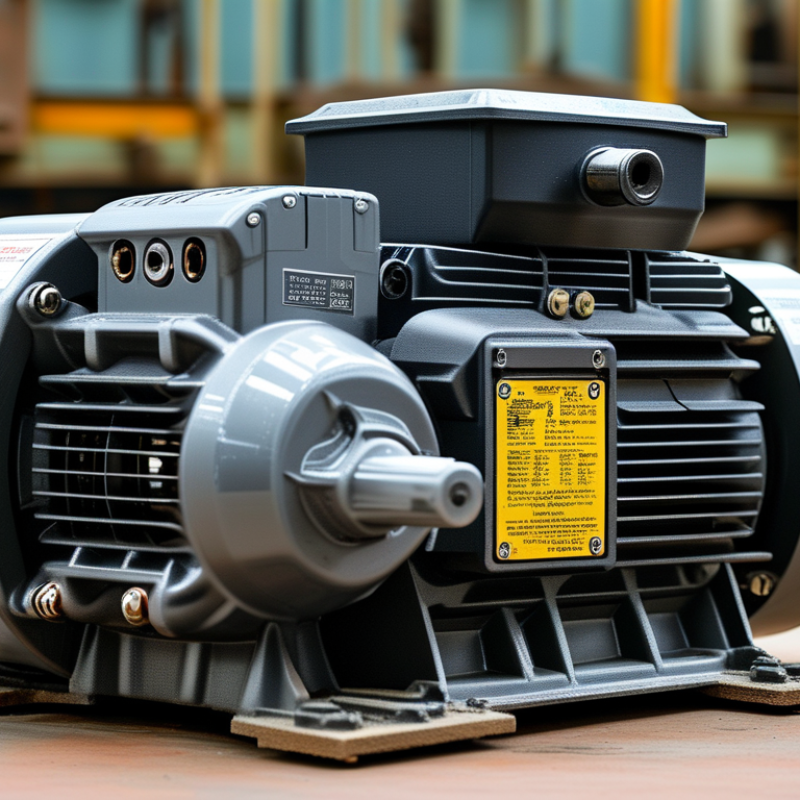
A low-voltage motor usually operates below 1,000 volts AC or 1,500 volts DC under IEC 60038. Industrial specifications often use lower limits, such as 600 volts, depending on local practice. The voltage label alone is not enough. Engineers also check rated current, insulation class, efficiency, enclosure, and duty cycle. An industrial motor may run beside dust, moisture, heat, or frequent starts. Its enclosure must match the site, often through an appropriate IP rating. That boundary is practical, not perfect.
The International Energy Agency reports that electric motor systems consume about half of global electricity. The U.S. Department of Energy also identifies motor systems as a major industrial energy-use category in its Motor Systems Market Assessment. Small efficiency gains can therefore reduce substantial operating costs. IE3 and IE4 efficiency classes help, but efficiency depends on loading, alignment, bearings, and control settings. A motor running at 40% load may not deliver its catalog efficiency. This is where selection becomes less tidy. Real factories rarely behave like test laboratories.
Tips: Record the supply voltage, starting method, ambient temperature, altitude, load profile, and required speed before choosing a motor. Check whether variable-speed operation needs reinforced insulation. Review maintenance access, bearing life, and cooling airflow. A short site measurement can expose assumptions that a datasheet hides. Use current readings across several shifts, not one convenient afternoon.
Choosing the 10 best low voltage motors starts with measurable performance, not catalogue claims. The International Energy Agency reports that electric motor systems consume around half of global electricity. Therefore, a small efficiency difference can become a large operating cost over thousands of hours. Compare IE efficiency class, measured efficiency at 50%, 75%, and 100% load, starting current, torque, and power factor. A motor showing excellent full-load efficiency may perform poorly on a lightly loaded pump.
Thermal behavior deserves equal attention. Record winding temperature, bearing temperature, vibration, and noise after several hours under real conditions. The U.S. Department of Energy’s Motor System Market Assessment identifies motor-driven equipment as responsible for roughly 68% of electricity use in U.S. manufacturing. That figure makes maintenance data commercially important. Check enclosure protection, insulation class, duty rating, cooling method, and compatibility with variable-frequency drives. A 400-volt motor in a dusty plant needs more than impressive efficiency numbers.
Field experience can expose weak assumptions. A motor may pass a laboratory test yet struggle with frequent starts, voltage imbalance, or restricted airflow. It happens. Calculate lifecycle cost using purchase price, electricity, downtime, and bearing replacement. IEC 60034-30-1 provides a consistent framework for comparing efficiency classes, but it does not replace site testing. I would also question unusually optimistic savings estimates. A neat spreadsheet can still mislead. Record actual load profiles before selecting the final motor.
| No. | Motor Type / Recommended Use | Typical Rated Output | Common Supply | Typical Speed | Efficiency Class | Protection Rating | Duty Rating | Starting / Speed Control | Key Performance Strength | Important Selection Criteria |
|---|---|---|---|---|---|---|---|---|---|---|
| 1 | Premium-Efficiency Squirrel-Cage Induction Motor General-purpose plant drives |
0.75–315 kW | Three-phase, 380–480 V, 50/60 Hz | Approximately 750–3,600 rpm, depending on pole count | IE3–IE4 | Typically IP55 | S1 continuous duty | Direct-on-line, star-delta, soft starter, or variable-frequency drive | Reliable construction, low maintenance, and broad compatibility with industrial equipment | Check rated load, service factor, starting current, ambient temperature, mounting arrangement, and required efficiency level |
| 2 | High-Efficiency Motor for Pumps Water, process, and circulation systems |
1.1–250 kW | Three-phase, 380–690 V, 50/60 Hz | Approximately 1,450–3,600 rpm | IE3–IE4 | Typically IP55 or IP56 | S1 continuous duty | Best operated with a variable-frequency drive for flow and pressure control | Efficient operation at steady loads and good suitability for long daily running hours | Compare pump affinity requirements, part-load efficiency, shaft power, vibration limits, and compatibility with the pump seal system |
| 3 | Inverter-Duty Induction Motor Conveyors, fans, mixers, and variable-speed machinery |
0.75–315 kW | Three-phase, 380–690 V, 50/60 Hz | Wide range through VFD control; commonly 300–3,600 rpm | IE3–IE4 | Typically IP55 | S1 or intermittent duty, depending on application | Designed for VFD operation, with reinforced insulation and improved bearing-current protection | Stable torque and speed control over a broad operating range | Verify minimum speed, cooling performance at low speed, inverter-rated insulation, cable length, and grounding requirements |
| 4 | High-Torque Motor Compressors, crushers, hoists, and heavy conveyors |
5.5–400 kW | Three-phase, 380–690 V, 50/60 Hz | Approximately 750–3,600 rpm | IE3–IE4 | Typically IP55 or IP56 | S1, S3, or S4 according to load cycle | Soft starter, VFD, or reduced-voltage starter to manage starting torque and current | Strong starting capability and resistance to demanding acceleration cycles | Evaluate locked-rotor torque, breakdown torque, acceleration time, load inertia, braking requirements, and thermal capacity |
| 5 | Washdown and Corrosion-Resistant Motor Food, beverage, and chemical processing |
0.37–90 kW | Three-phase, 200–690 V, 50/60 Hz | Approximately 900–3,600 rpm | IE3–IE4 | IP66 or IP69, application dependent | S1 continuous duty | Direct-on-line or VFD operation | Improved resistance to water jets, cleaning chemicals, and humid environments | Confirm enclosure rating, stainless or coated construction, drain arrangement, hygienic mounting, and chemical compatibility |
| 6 | Brake Motor Hoists, positioning equipment, and material handling |
0.37–160 kW | Three-phase, 200–690 V, 50/60 Hz | Approximately 750–3,600 rpm | IE3–IE4 | Typically IP54–IP66 | S3 or S4 intermittent duty is common | Electromagnetic spring-applied brake with starter or VFD control | Rapid stopping and secure load holding when correctly sized | Check brake torque, stopping time, switching frequency, thermal duty, emergency-stop requirements, and mechanical load holding |
| 7 | Explosion-Protection Motor Hazardous-area pumps, fans, and process equipment |
0.75–315 kW | Three-phase, 380–690 V, 50/60 Hz | Approximately 750–3,600 rpm | IE3–IE4 | Commonly IP55 or higher | S1 continuous duty | Direct-on-line, soft starter, or certified VFD arrangement | Designed to limit ignition risk in classified hazardous locations | Match the motor certification to zone or division, gas or dust group, temperature class, ambient conditions, and installation code |
| 8 | Synchronous Reluctance Motor High-efficiency variable-speed systems |
5.5–350 kW | Three-phase, typically 380–690 V, 50/60 Hz with VFD | Speed controlled electronically; commonly up to 3,600 rpm | IE4–IE5 | Typically IP55 | S1 continuous duty | Requires a compatible drive and motor-control profile | High efficiency and low rotor losses, particularly in variable-load applications | Assess drive compatibility, minimum speed, overload capability, acoustic noise, commissioning requirements, and lifecycle savings |
| 9 | Permanent-Magnet Synchronous Motor Compact, high-efficiency machinery |
1–250 kW | Three-phase, commonly 200–690 V with VFD | Approximately 300–6,000 rpm, depending on design | IE4–IE5 | Typically IP55 or IP65 | S1 or application-specific duty | Requires a dedicated controller; not normally connected directly to the supply | High power density, strong part-load efficiency, and precise speed regulation | Consider drive and encoder requirements, demagnetization limits, overspeed protection, maintenance procedures, and total system cost |
| 10 | Smoke-Extraction and High-Temperature Motor Tunnels, buildings, and industrial ventilation |
1.1–315 kW | Three-phase, 380–690 V, 50/60 Hz | Approximately 1,450–3,600 rpm | IE3–IE4 | Typically IP55 or IP56 | Continuous duty with emergency short-time operation where certified | Direct-on-line or certified VFD arrangement | Designed for reliable operation under elevated temperature or emergency ventilation conditions | Verify certified temperature-time rating, airflow direction, cooling method, fire-safety standard, emergency supply, and installation orientation |
Ten Leading Low-Voltage Motors for Industrial Applications
Low-voltage motors drive pumps, fans, conveyors, compressors, mixers, and machine tools. The leading choices include three-phase induction motors, premium-efficiency motors, brake motors, single-phase motors, explosion-protected motors, servo motors, permanent-magnet motors, synchronous reluctance motors, geared motors, and inverter-duty motors. Each serves a different operating reality. A dusty workshop needs stronger protection than a clean assembly room.
The International Energy Agency estimates that motor systems consume about 46% of global electricity. The U.S. Department of Energy also reports that motor-driven equipment uses nearly 70% of industrial electricity. These figures make efficiency more than a purchasing detail. Select motors against IEC 60034-30-1 efficiency classes, expected load, starting frequency, and annual running hours. IE3 or IE4 efficiency can reduce losses, but only when the motor matches the actual load.
Plant inspections often reveal oversized motors running far below capacity. That wastes energy and may increase maintenance problems. It happens more often than expected. Variable-frequency drives can improve control, especially for pumps and fans, yet poor settings may create heat, vibration, or bearing-current issues. Check enclosure ratings, insulation systems, cooling methods, shaft alignment, and service factors before approval. A higher efficiency label cannot repair a badly designed installation. The most reliable selection combines measured load data, local operating conditions, documented standards, and a realistic maintenance plan.
10 Best Low Voltage Motors for Industrial Use?
Selecting a low voltage motor starts with the workplace, not the catalog. In a dry, clean packaging room, a standard enclosed motor may provide efficient, dependable service. A dusty grain conveyor needs stronger sealing and careful temperature checks. Moisture changes the decision. Outdoor pumps may require corrosion-resistant construction, drainage, and suitable enclosure protection. Do not trust a high-efficiency label alone. Shaft load, starting frequency, ambient temperature, and duty cycle often determine real performance. Field measurements matter.
For ten common industrial applications, the best choice may vary: fan, pump, compressor, conveyor, mixer, hoist, machine tool, crusher, blower, or refrigeration unit. Fans usually favor steady torque and quiet operation, while conveyors need reliable starting torque under loaded belts. Mixers and crushers can impose shock loads, so service factors and mechanical alignment deserve attention. Hoists require braking coordination and controlled acceleration. A variable-speed drive can improve process control, but it may add heat, bearing stress, or electrical noise. Test compatibility before installation.
Experienced technicians record current on all phases after commissioning. They also inspect vibration, bearing temperature, and unusual sound during peak production. Small details reveal large problems. Yet selection is not perfectly predictable. A motor sized from incomplete load data may run acceptably during testing and fail during seasonal demand. Recheck the load profile, maintenance access, and spare-parts plan with the site team. Certified calculations and local electrical requirements should guide the final specification, especially in wet, hot, or hazardous areas.
Typical full-load efficiency ranges for selecting motors under different industrial operating conditions
Synchronous and permanent-magnet motors generally provide the highest efficiency, while brake, crane-duty, washdown, and hazardous-area motors may trade some efficiency for starting torque, protection, braking, or safety requirements. Actual results depend on motor size, load profile, supply frequency, control method, and installation conditions.
Selecting one of the 10 best low voltage motors for industrial use means more than comparing power ratings.
Installation quality strongly affects service life. Place the motor on a rigid, level base. Check shaft alignment with a precision tool, not by eyesight. Poor alignment creates heat, vibration, and premature bearing wear.
Confirm that the supply voltage matches the motor nameplate. Qualified electricians should complete all wiring under local electrical codes.
Maintenance should begin with a practical inspection schedule.
Record vibration, temperature, current, and unusual noise during normal operation. Small changes matter. Keep cooling openings free from dust, oil, and loose packaging.
Inspect terminal connections for discoloration or looseness after the first operating period. Lubricate bearings only with the specified lubricant and quantity. Too much grease can raise temperature. That mistake is common.
Use insulated tools, proper lifting equipment, and calibrated test instruments. Maintenance records should include dates, readings, repairs, and the technician’s name.
Safety controls must remain active before anyone opens a terminal box or removes a guard.
Isolate the power source, apply lockout and tagout, and verify zero voltage with a tested meter. Wait for rotating parts to stop completely. A motor can restart unexpectedly through automatic controls.
Guards must cover couplings, fans, and exposed shafts. Wet areas need suitable enclosures and correctly rated protection. Emergency stops should be tested under controlled conditions.
Check the details twice. Even a strong procedure can fail when workers rush, skip verification, or assume another person completed the isolation.
: It usually operates below 1,000 volts AC or 1,500 volts DC. Local practices may use lower limits. Voltage alone is not enough.
Check voltage, current, speed, load profile, insulation, enclosure, and duty cycle. Record ambient temperature and altitude. Site data matters.
Induction motors suit pumps, fans, conveyors, compressors, and mixers. Brake motors support controlled stopping. Servo motors suit precise movement. Geared motors provide higher output torque.
Not always. Efficiency depends on loading, alignment, bearings, and control settings. An oversized motor may run at 40% load and waste energy. The nameplate cannot show every factory condition.
It can improve control for pumps and fans. Incorrect settings may cause heat, vibration, or bearing-current problems. Check insulation and cooling requirements before approval.
Mount it on a rigid, level base. Check shaft alignment with a precision tool. Confirm supply voltage against the nameplate. Poor alignment can damage bearings quickly.
Record vibration, temperature, current, and unusual noise. Keep cooling openings free from dust and oil. Use only the specified lubricant and quantity. Too much grease can increase temperature. That mistake is common.
Isolate the power source and apply lockout and tagout. Verify zero voltage with a tested meter. Wait until all rotating parts stop. Replace guards over couplings, fans, and exposed shafts. Never assume isolation is complete.
A Low Voltage Motor is designed to operate within defined voltage limits while delivering reliable mechanical power for industrial equipment such as pumps, conveyors, fans, compressors, and processing machines. This article explains the main features that distinguish low-voltage motors, including rated power, efficiency, torque, speed control, insulation quality, enclosure protection, heat resistance, and compatibility with industrial control systems. It also presents ten leading motor types and configurations suitable for different applications, helping readers compare performance, durability, operating costs, and maintenance needs.
Selecting the right motor depends on the working environment, load characteristics, duty cycle, installation space, temperature, dust, moisture, and required control method. The article also highlights practical installation and maintenance requirements, including correct alignment, wiring, grounding, ventilation, vibration monitoring, lubrication, and routine inspections. Following appropriate safety procedures and manufacturer specifications can improve service life, reduce unexpected downtime, and support stable, efficient, and safe industrial operation.

YWOO Motor