Choosing the right Three Phase Motor in 2026 requires more than comparing catalog prices. Global buyers must consider voltage, frequency, duty cycle, efficiency, starting torque, and local service support. A motor running beside a dusty conveyor faces different demands from one driving a clean-water pump. Small details matter.
This guide examines the leading three-phase motor types available to international purchasers. It considers squirrel-cage induction motors, wound-rotor motors, synchronous motors, and permanent-magnet designs. Each option offers practical strengths and trade-offs. Induction motors remain widely trusted because they are durable, familiar, and relatively easy to maintain. Synchronous and permanent-magnet motors can provide excellent efficiency, especially under stable operating conditions. However, their controls and repair requirements may be more demanding.
Real projects are rarely perfect.
Our comparison uses engineering principles, manufacturer documentation, and field-oriented selection criteria. It also considers IEC practices, efficiency classes, inverter compatibility, thermal performance, and replacement availability. Buyers should verify every specification with the supplier, especially rated current, insulation class, protection rating, bearing design, and certification requirements. A promising datasheet cannot replace a site inspection.
Performance depends on the whole system. An oversized motor may waste energy, while an undersized unit can overheat during repeated starts. Climate, altitude, installation alignment, and maintenance quality can change the result. This overview aims to support informed decisions, not promote one universal solution. The best motor is the one that matches the application, operating environment, budget, and long-term service plan. Some recommendations will remain conditional. That is honest engineering.
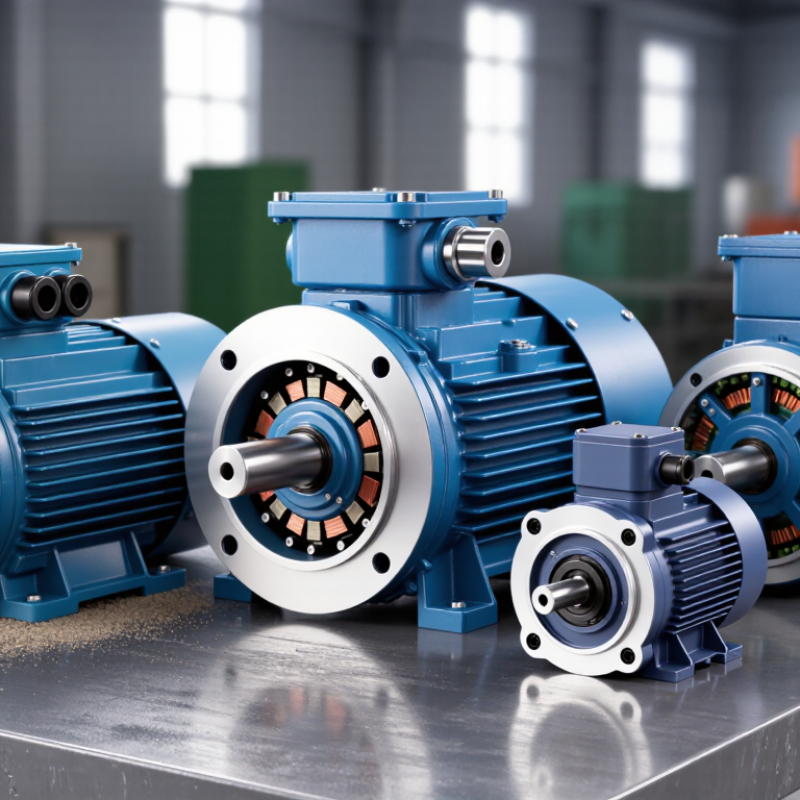
Three-Phase Motors: Definition, Structure, and Operating Principles
A three-phase motor converts electrical energy into continuous mechanical rotation. It uses three alternating currents, spaced 120 electrical degrees apart. This arrangement creates a rotating magnetic field inside the stator. The rotor follows that field and produces torque at the shaft.
The main structure includes a laminated stator core, copper windings, rotor, bearings, shaft, frame, and cooling fan. In an induction motor, the rotor receives current through electromagnetic induction. It never fully matches the magnetic field speed. That small difference is called slip, and it is essential for torque production. Synchronous motors operate differently. Their rotor turns at the magnetic field’s exact speed, usually with permanent magnets or excited windings. Field inspections often reveal practical issues that theory misses. Poor alignment, blocked ventilation, and incorrect voltage can cause overheating. Even a strong motor may fail under these conditions.
Tips
Check voltage, frequency, mounting, and shaft load before selection. Confirm the motor’s protection rating for dust and moisture. A high-efficiency model can reduce operating costs, but only when correctly sized. Oversizing is not always safer. It may lower efficiency during light-load operation. Review starting current, duty cycle, ambient temperature, and maintenance access with a qualified engineer. Small installation details matter. My own view is slightly cautious: efficiency labels help, but real savings depend on the entire driven system.
A three-phase motor converts three-phase electrical energy into rotational mechanical power. The comparison below summarizes common motor types, their structures, operating principles, and practical selection considerations for global industrial applications.
| Motor Type | Main Structure | Operating Principle | Typical Speed Behavior | Typical Efficiency Range | Key Advantages and Limitations | Best-Fit Applications |
|---|---|---|---|---|---|---|
| Squirrel-Cage Induction Motor | Laminated stator core with a three-phase winding; rotor made of conductive bars short-circuited by end rings. The rotor has no brushes or slip rings. | Three-phase stator current creates a rotating magnetic field. Electromagnetic induction produces rotor current and torque. The rotor must run slightly below synchronous speed to maintain torque. | Fixed-speed operation is normally close to synchronous speed, with approximately 1%–8% slip under load. Speed can be adjusted with a variable-frequency drive. | Approximately 80%–97%, depending on rated power, speed, enclosure, and efficiency class. | Rugged, economical, low maintenance, and widely available. Direct-on-line starting may cause high inrush current and limited starting torque. | Pumps, fans, compressors, conveyors, machine tools, general-purpose industrial equipment, and HVAC systems. |
| Wound-Rotor Induction Motor | Stator is similar to an induction motor. The rotor contains a three-phase insulated winding connected to external resistors through slip rings and brushes. | The rotating stator field induces rotor action. External rotor resistance can increase starting torque and reduce starting current during acceleration. | Variable during starting and load changes; final operating speed remains below synchronous speed. Speed control by rotor resistance is inefficient for continuous operation. | Approximately 75%–95%, depending on rotor resistance, load, and operating conditions. | High starting torque and controlled acceleration. More expensive and maintenance-intensive because of brushes, slip rings, and external resistors. | Cranes, hoists, elevators, crushers, mills, conveyors with high inertia, and heavy-starting-load machinery. |
| Synchronous Motor | Stator has a three-phase distributed winding. The rotor uses a DC field winding or permanent magnets and may include damper bars for starting and stability. | The rotor magnetic field locks to the rotating stator field and runs at synchronous speed. Synchronous speed is calculated as 120 × frequency ÷ number of poles. | Constant speed with essentially zero steady-state slip when synchronized to the supply frequency. | Approximately 90%–98% for medium- and large-power machines, depending on design and load. | Excellent speed accuracy and the ability to operate at a leading, unity, or lagging power factor. Starting equipment or a variable-frequency drive may be required. | Constant-speed compressors, large pumps, fans, mills, power-factor correction, and high-power industrial drives. |
| Permanent-Magnet Synchronous Motor | Three-phase stator winding with high-energy permanent magnets mounted on or inside the rotor. It normally operates with an electronic inverter. | The inverter generates a rotating stator field that interacts directly with the permanent-magnet rotor field. No rotor excitation current is needed. | Synchronous operation over the controlled speed range. Wide speed regulation is available with a suitable drive and control system. | Approximately 90%–98%, with high efficiency at partial load in many applications. | High power density, strong efficiency, low rotor losses, and excellent controllability. Higher initial cost, magnet-related supply considerations, and possible demagnetization risk under severe conditions. | Servo systems, robotics, electric vehicles, high-efficiency pumps, compressors, fans, and compact automated equipment. |
| Synchronous Reluctance Motor | Three-phase stator similar to an induction motor. The rotor uses a laminated iron structure with flux barriers and no rotor winding or permanent magnets. | Reluctance torque aligns the rotor's low-reluctance magnetic axis with the rotating stator field. Operation generally requires an inverter for starting and speed control. | Synchronous speed under inverter control, with a broad adjustable-speed range depending on the drive. | Approximately 85%–96%, depending on power rating, control method, and load point. | No rotor copper loss and no permanent magnets; suitable for efficient variable-speed operation. Torque ripple, acoustic noise, and drive compatibility must be considered. | Pumps, fans, compressors, conveyors, and variable-speed industrial systems seeking lower operating losses without permanent magnets. |
| Brushless DC Motor with Three-Phase Drive | Permanent magnets are mounted on the rotor, while the three-phase windings are located on the stator. Electronic commutation replaces mechanical brushes. | A controller energizes the stator phases in sequence to maintain torque-producing interaction with the rotor magnetic field. Position feedback may use sensors or sensorless estimation. | Broad electronically controlled speed range; speed depends on the inverter, feedback method, and motor design. | Approximately 85%–95%, depending on size, control strategy, and operating point. | Compact, efficient, and low in mechanical maintenance. Requires an electronic controller and careful thermal, electromagnetic, and control-system design. | Automation equipment, cooling systems, material handling, compact machinery, battery-powered systems, and precision motion applications. |
| Selection note: Actual performance depends on rated power, voltage, frequency, pole count, load profile, enclosure, cooling method, ambient temperature, altitude, installation method, power quality, and drive settings. Efficiency values are typical engineering ranges rather than guaranteed ratings; buyers should verify the motor nameplate, applicable IEC or NEMA requirements, energy-efficiency class, duty cycle, and local electrical regulations before purchase. | ||||||
A three-phase motor converts electrical energy into continuous shaft rotation. It uses three alternating currents spaced 120 degrees apart. Their interaction creates a rotating magnetic field inside the stator. The rotor follows this field and produces torque.
Common parts include the stator, rotor, bearings, shaft, frame, windings, and cooling fan. The stator contains laminated steel and copper windings. Bearings support smooth shaft movement. Blocked cooling paths can quickly cause overheating.
Electromagnetic induction creates current in the rotor. The rotor turns slightly slower than the rotating magnetic field. This speed difference is called slip. Without slip, torque production would not work.
A synchronous motor rotates at the magnetic field’s exact speed. Its rotor may use permanent magnets or excited windings. An induction motor always operates with some slip. The better choice depends on speed control, load, and maintenance needs.
Compare efficiency across the complete operating cycle, not only at peak load. Review rated efficiency, duty cycle, speed range, and actual measured data. A motor operating 6,000 hours yearly can waste significant energy when poorly sized. Peak efficiency can mislead.
Check voltage, frequency, phase configuration, mounting, shaft load, and starting torque. Review ambient temperature, insulation class, enclosure protection, and maintenance access. Confirm compatibility with the driven machine. Small specification gaps can delay installation.
No. Oversizing may reduce efficiency during light-load operation. It can also increase purchase and operating costs. Undersizing may cause overheating during peak demand. Leave reasonable thermal and torque margins instead.
A motor designed for 60 hertz may behave differently on a 50-hertz supply. Dust, moisture, salt air, and frequent washing can damage weak protection. Poor alignment can create vibration and bearing stress. Paper specifications are not enough.
It can provide smoother speed control for pumps, fans, and other changing loads. However, harmonics and reduced cooling must be considered. Check the motor’s compatibility before installation. I sometimes overvalue control benefits, so measured site data matters.
A Three Phase Motor is an efficient electrical machine designed to convert three-phase alternating current into mechanical power. Its main components typically include a stator, rotor, bearings, shaft, housing, and cooling system. Depending on construction and operating needs, common types include induction motors, synchronous motors, and specialized designs for variable-speed applications. Each type offers different advantages in starting performance, speed control, efficiency, maintenance requirements, and suitability for industrial equipment, pumps, fans, compressors, and production machinery.
For international buyers, motor selection should consider rated power, torque, speed, efficiency class, duty cycle, enclosure protection, cooling method, and operating environment. Voltage, frequency, phase configuration, insulation level, and installation dimensions must match the local electrical system and applicable international standards. Buyers should also evaluate certification, transport conditions, control compatibility, spare parts, and after-sales technical support. By comparing performance, energy consumption, application demands, and installation requirements, users can choose a reliable Three Phase Motor that delivers stable operation across different markets and working conditions.

 YWOO Motor